RV Storage in Montrose, CO: Covered vs Uncovered Options Guide |
| RV STORAGE IN MONTROSE, CO: COVERED VS UNCOVERED PARKING, SECURITY, AND WHAT TO LOOK FOR
⏱ 13 min read ·
📄 #2,448 words
Compare covered vs uncovered RV storage in Montrose, CO. Learn about security features, pricing differences, and what to look for when choosing a facility.
|
C overed RV storage in Montrose, CO costs $75 to $200 per month and protects against UV damage, hail, and snow, while uncovered parking runs $30 to $100 monthly with basic lot security. For Western Slope owners storing rigs longer than three months, covered storage offers the best balance of protection and price given the region's intense sun exposure and unpredictable hail seasons.
| Key Points: | |
|---|---|
| • | Uncovered parking costs $30 to $100 per month; covered storage runs $75 to $200 monthly in Montrose |
| • | Colorado's Western Slope receives 300+ days of sunshine annually, causing significant UV degradation to uncovered RV roofs and seals |
| • | Security essentials include gated access, surveillance cameras, adequate lighting, and individual access codes |
| • | RV storage spaces should measure 3 to 5 feet longer than your vehicle to accommodate hitches, ladders, and spare tires |
| • | Month-to-month leases provide flexibility for seasonal RV owners who travel between spring and fall |
Understanding RV Storage Types in Montrose
RV storage in Montrose falls into three categories: uncovered outdoor parking, covered parking with roof protection, and fully enclosed indoor storage. Each option serves different needs based on your budget, storage duration, and the value of your recreational vehicle.
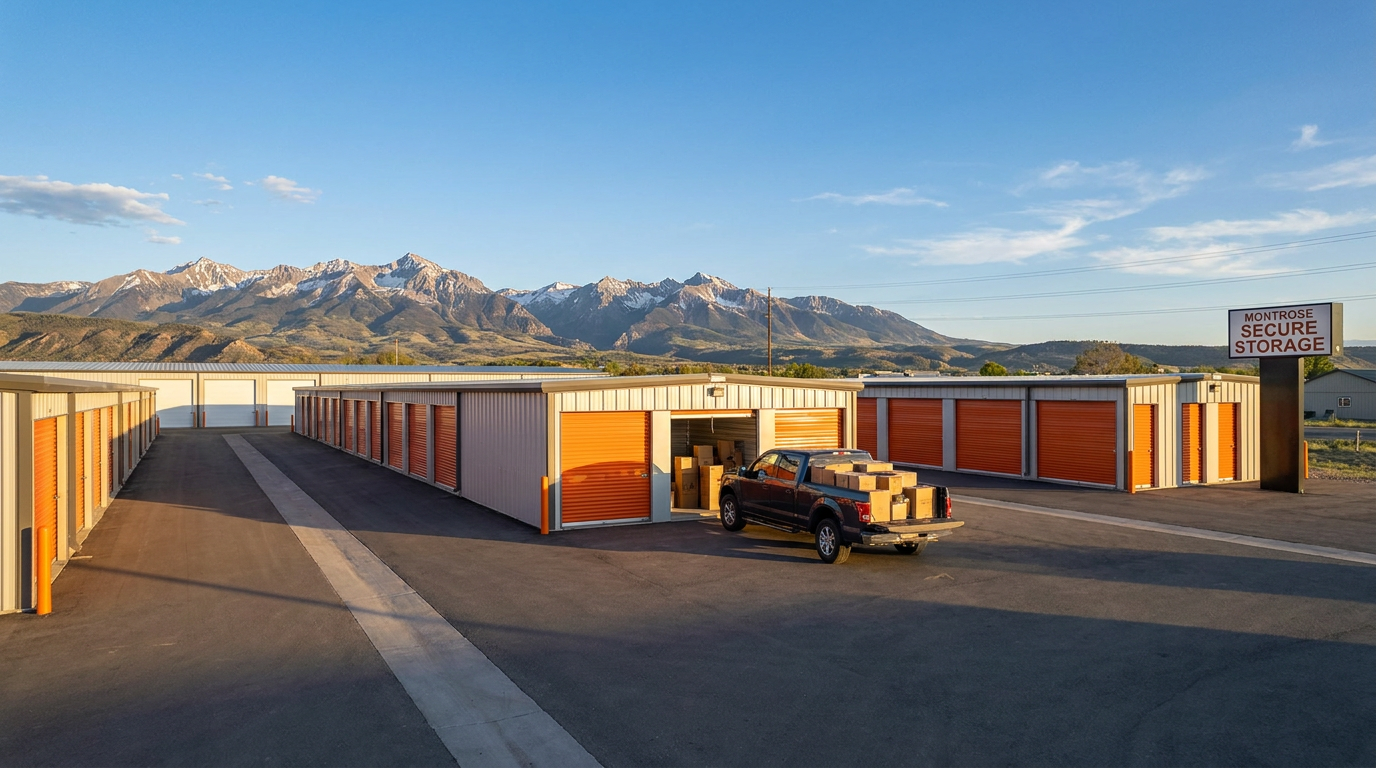
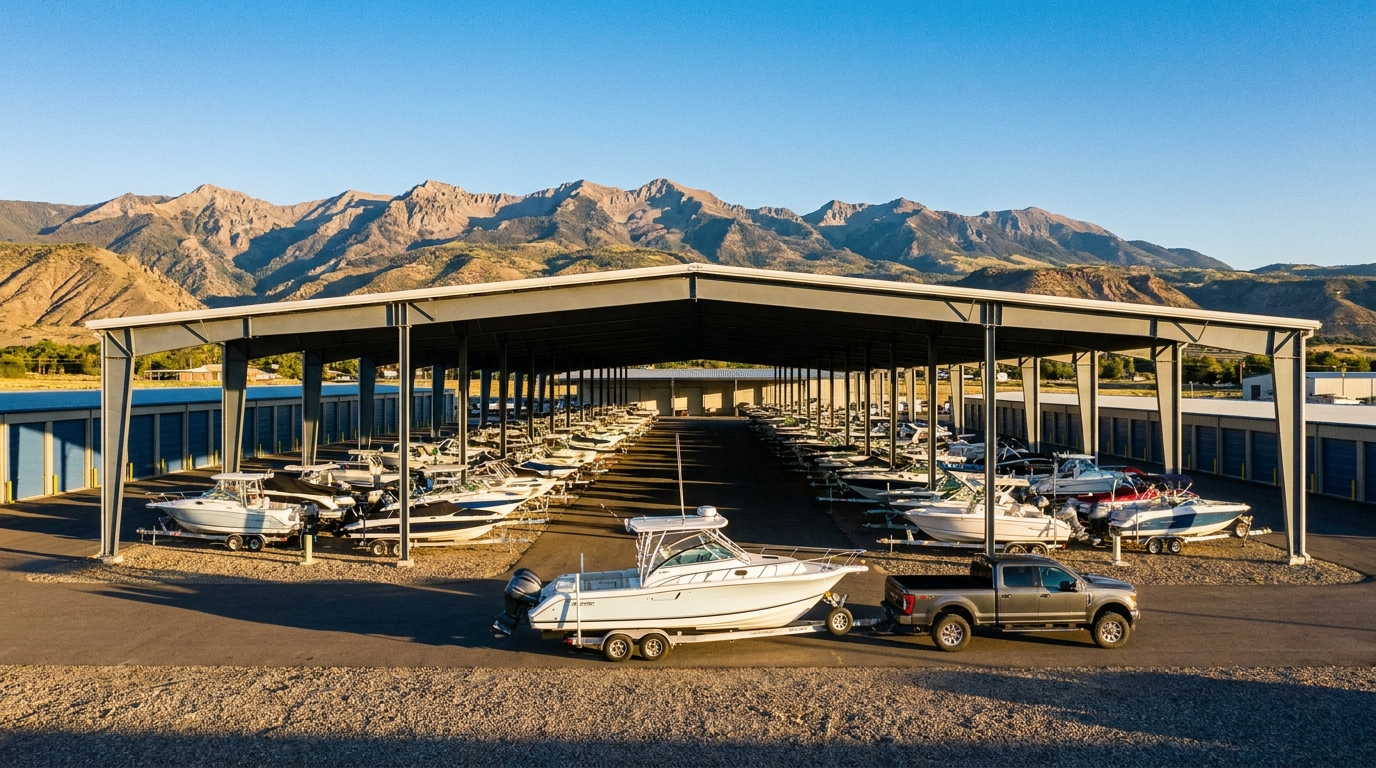
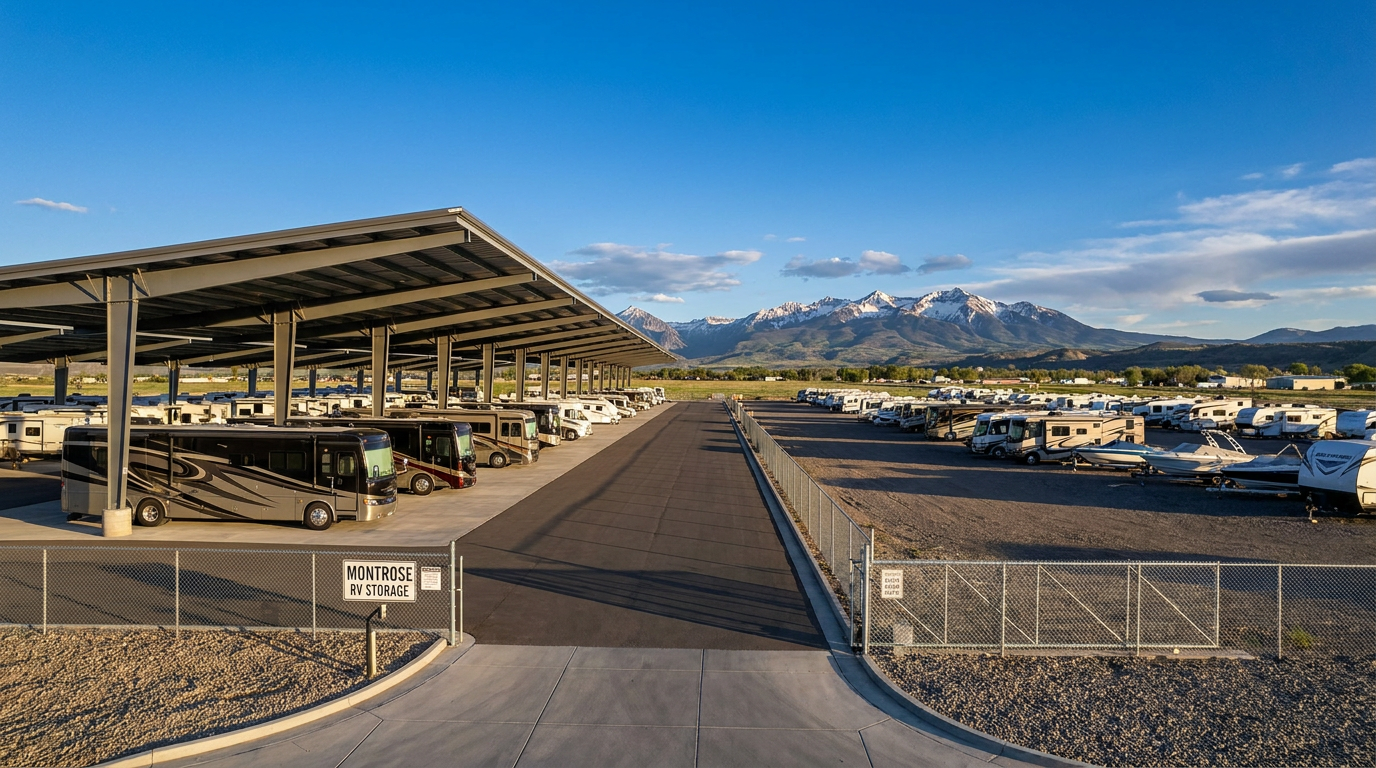
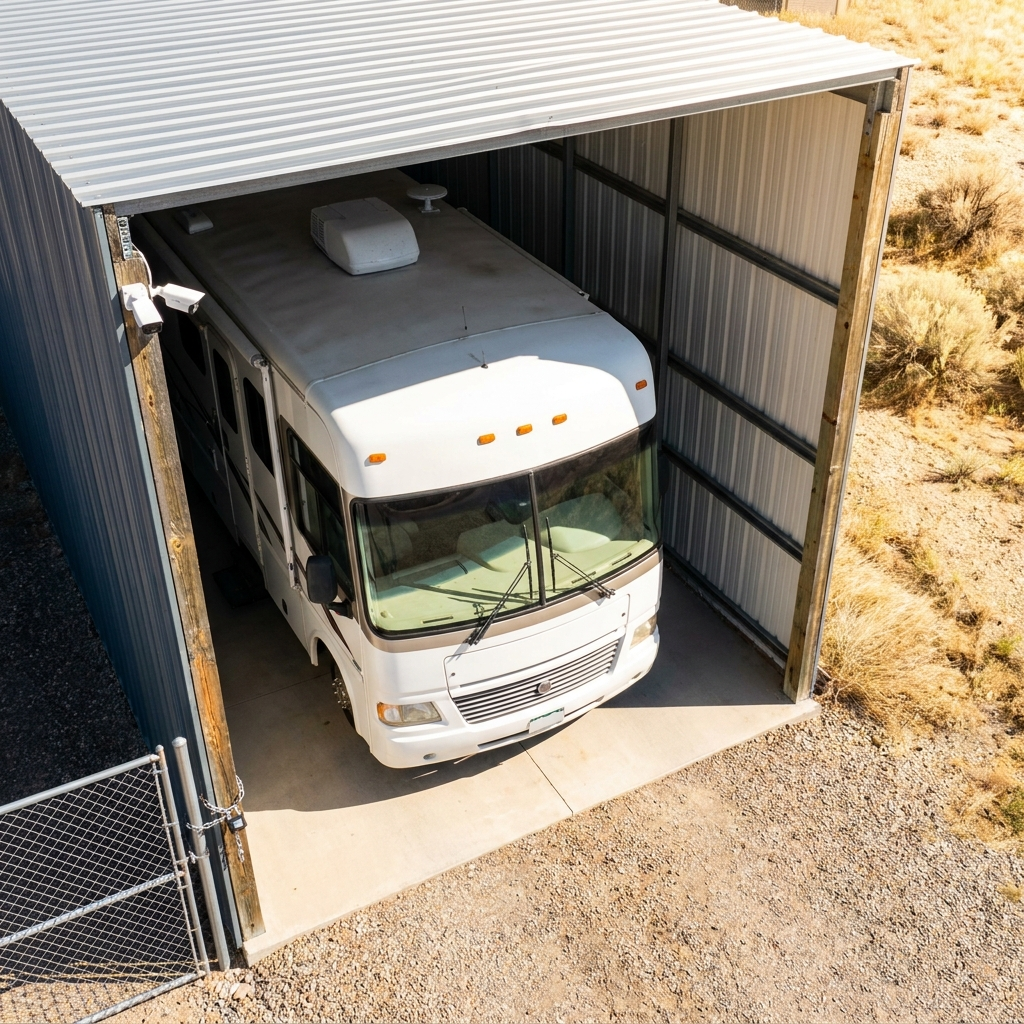
According to Self Storage Delta's comparison guide, uncovered parking represents the most economical choice, typically occupying secured lots with perimeter fencing and basic surveillance. Covered storage adds overhead roof protection without full walls, blocking direct sun, rain, and falling debris while maintaining easy drive-in access.
Enclosed storage provides maximum protection with four walls and a roof, making it the premium option for high-value motorhomes, vintage trailers, or rigs with sensitive electronics. Montrose facilities primarily offer uncovered and covered options, with enclosed spaces being less common in the local market.
Covered vs Uncovered Storage: A Direct Comparison
The choice between covered and uncovered RV storage depends on three factors: how long you plan to store, what weather threats concern you most, and your monthly budget. Western Slope weather patterns make this decision particularly important for Montrose residents.
| Feature | Uncovered Parking | Covered Storage | Enclosed Storage |
|---|---|---|---|
| Monthly Cost (Montrose) | $30 to $100 | $75 to $200 | $150 to $350 |
| UV Protection | None | Full overhead coverage | Complete protection |
| Hail Protection | None | Roof coverage only | Complete protection |
| Snow and Rain | Fully exposed | Protected from above | Complete protection |
| Best For | Short-term, budget-conscious | 3+ month storage, moderate budgets | High-value RVs, long-term |
When Uncovered Parking Makes Sense
Uncovered RV parking works well for owners who use their rigs frequently throughout the season. If you take your travel trailer out every two to three weeks during summer months, the lower cost of uncovered storage lets you maintain convenient access without paying for protection you do not need.
Budget-conscious owners with older trailers or lower-value rigs often choose uncovered options. A 15-year-old pop-up camper worth $3,000 does not justify $150 monthly storage fees when a $45 uncovered spot provides basic security and accessibility.
When Covered Storage Provides Better Value
Covered storage becomes the smarter choice when your RV sits unused for extended periods. According to Extra Space Storage's pricing analysis, the additional $30 to $75 monthly investment in covered parking can prevent thousands in repair costs from weather damage.
Montrose County experiences an average of 245 sunny days per year, with summer UV index readings frequently reaching 10 or higher. This intense solar exposure degrades rubber seals, fades exterior graphics, and causes roof membrane deterioration on uncovered RVs within 2 to 3 years of continuous exposure.
Security Features to Look For in Montrose RV Storage
Security represents the most critical factor when selecting RV storage, regardless of whether you choose covered or uncovered parking. A facility's security infrastructure directly affects your insurance rates and peace of mind.
Essential Security Requirements
Gated access with individual entry codes provides the foundation of RV storage security. Each tenant should receive a unique PIN that logs entry and exit times, creating an audit trail if theft or vandalism occurs. Facilities using shared codes or leaving gates unlocked present unacceptable risk.
Surveillance camera coverage should include entrance points, perimeter fencing, and interior driving lanes. Modern facilities use high-definition cameras with 30-day recording retention. Ask facility managers whether cameras record continuously or only trigger on motion detection.
Adequate lighting throughout the property deters criminal activity and helps you safely access your RV during early morning or evening hours. LED lighting has become standard at quality facilities, providing consistent illumination without the maintenance issues of older lighting systems.
Advanced Security Options
Some Montrose storage facilities offer on-site management during business hours, providing an additional layer of oversight. While 24/7 staffing remains rare in the local market, facilities with regular management presence tend to maintain cleaner, better-organized properties.
Perimeter fencing should stand at least 6 feet tall with anti-climb features such as angled tops or barbed wire. Chain-link fencing with privacy slats prevents casual observation of stored vehicles from outside the property.
Size Requirements: How Much Space Does Your RV Need?
Selecting the correct storage space size prevents damage during parking maneuvers and ensures adequate clearance for maintenance access. According to SARV and Boat Storage's sizing guide, your storage space should measure 3 to 5 feet longer than your RV's total length.
Measuring Your RV Correctly
Total RV length includes components that extend beyond the main body. Measure from the front bumper or hitch coupler to the rear bumper, then add length for any mounted accessories. Rear-mounted spare tires, bike racks, and ladder extensions can add 2 to 4 feet beyond the manufacturer's stated length.
Fifth-wheel trailers require additional consideration for kingpin clearance when unhitched. The space between your truck bed and the trailer front adds 3 to 4 feet to total storage requirements. A 32-foot fifth-wheel typically needs a 38 to 40-foot storage space.
Common RV Types and Recommended Space Sizes
Travel trailers ranging from 18 to 25 feet fit comfortably in 25 to 30-foot spaces. Class C motorhomes measuring 23 to 30 feet require 28 to 35-foot spaces. Large Class A motorhomes and toy haulers exceeding 35 feet need spaces of 40 feet or longer.
Width matters for slide-out clearance during storage. While most RV storage spaces measure 10 to 12 feet wide, confirm that your rig fits with mirrors extended if the facility requires them to remain deployed.
Montrose Weather Considerations for RV Storage
The Western Slope's climate creates specific challenges for RV storage that differ from Front Range Colorado or coastal regions. Understanding local weather patterns helps you make informed storage decisions.
UV Exposure and Sun Damage
Montrose sits at 5,800 feet elevation, where UV radiation intensity increases approximately 4% for every 1,000 feet above sea level. This means local RVs receive roughly 23% more UV exposure than vehicles stored at sea level, accelerating degradation of rubber seals, caulking, and exterior finishes.
Roof membranes on travel trailers and motorhomes suffer the most significant UV damage. EPDM rubber roofs can crack and become brittle within 5 to 7 years of continuous sun exposure, compared to 10 to 15 years with covered storage protection.
Hail and Storm Damage Risk
Colorado ranks among the top five states for hail damage claims, with the Western Slope experiencing multiple severe hail events annually between May and September. A single hailstorm can cause $5,000 to $20,000 in damage to an uncovered RV, making covered storage a form of insurance.
The National Weather Service reports that Montrose County averages 3 to 5 significant hail events per year, with hailstones occasionally exceeding golf ball size. Covered storage eliminates this risk entirely for the roof and upper surfaces of your RV.
Winter Storage Considerations
Montrose winters bring temperatures that regularly drop below freezing, with occasional cold snaps reaching minus 10 degrees Fahrenheit. While covered storage does not provide temperature control, it prevents snow accumulation that can stress RV roofs and create ice dams around seals.
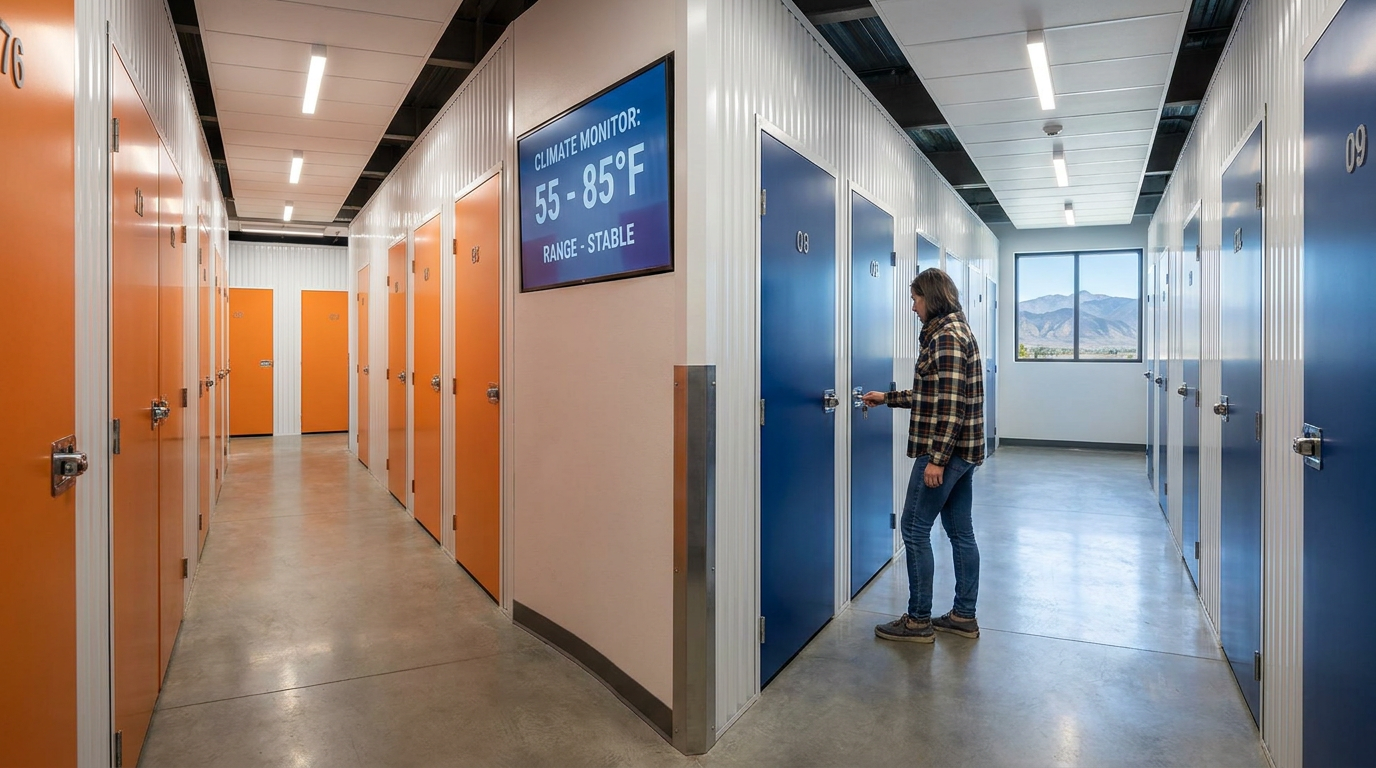
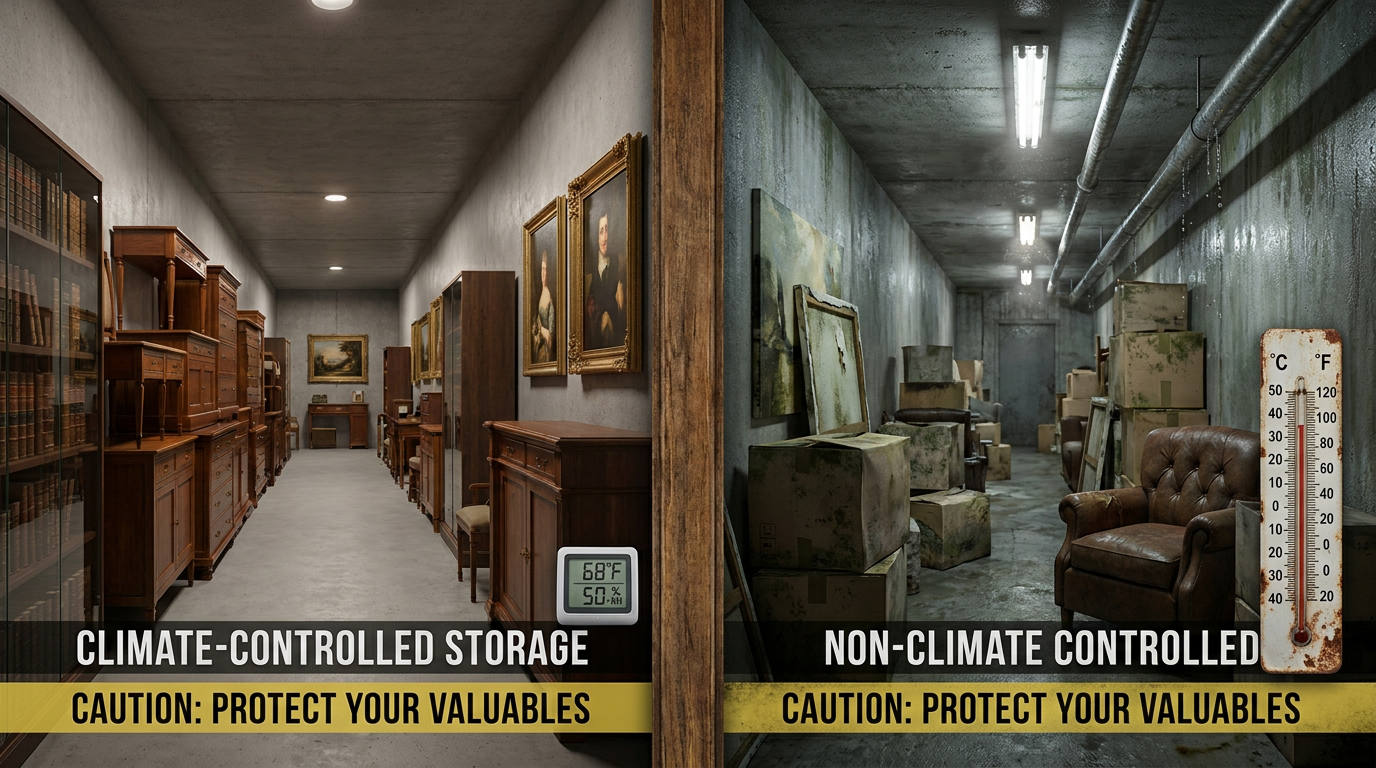
For RVs with sensitive electronics, leather interiors, or wooden components, climate-controlled storage at the N 9th Street facility maintains temperatures between 55 and 80 degrees Fahrenheit year-round, preventing freeze damage and humidity-related deterioration.
What to Look For When Touring Storage Facilities
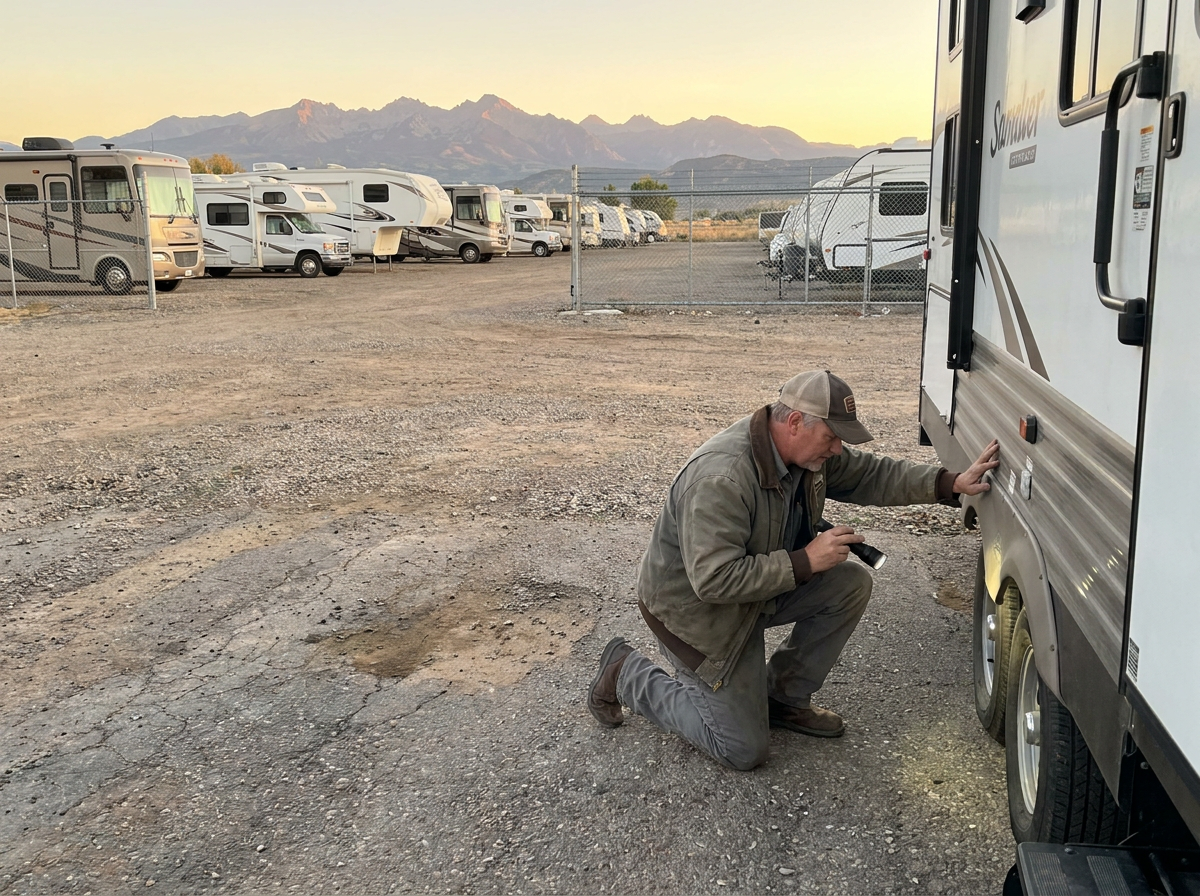
Visiting potential storage facilities before signing a lease reveals details that online listings and phone calls cannot convey. Schedule tours during different times of day to observe lighting conditions and traffic patterns.
Physical Condition Assessment
Paved or well-maintained gravel surfaces prevent tire damage and reduce dust accumulation on stored vehicles. Facilities with cracked asphalt, deep potholes, or muddy areas during wet weather indicate deferred maintenance that may extend to security systems and other infrastructure.
Drainage patterns matter for uncovered parking. Observe whether water pools in parking areas or flows away from storage spaces. Standing water under your RV promotes rust, tire degradation, and pest infestations.
Access and Maneuverability
Drive lanes should measure at least 25 feet wide to accommodate RV turning radiuses. Facilities designed for standard vehicles often have lanes too narrow for safe RV maneuvering, leading to mirror strikes and body damage.
Confirm gate dimensions before committing to any facility. Standard RV storage gates measure 12 to 14 feet wide and 14 feet tall, but some older facilities have gates that cannot accommodate modern Class A motorhomes or fifth-wheels with roof-mounted air conditioners.
Lease Terms and Flexibility
Month-to-month leases provide maximum flexibility for seasonal RV owners who may relocate or change storage needs. Facilities requiring 6 or 12-month commitments often offer lower rates but reduce your ability to respond to changing circumstances.
Review the storage FAQ for details on payment options, late fees, and move-out procedures. Quality facilities offer online payment portals, automatic billing, and prorated refunds for early termination.
Cost Factors Beyond Monthly Rent
The advertised monthly rate represents only part of your total RV storage cost. Understanding additional fees and requirements helps you budget accurately and avoid surprises.
Deposits and Administrative Fees
Many facilities require security deposits equal to one month's rent, refundable upon move-out inspection. Some charge non-refundable administrative fees of $25 to $50 for account setup and access credentials.
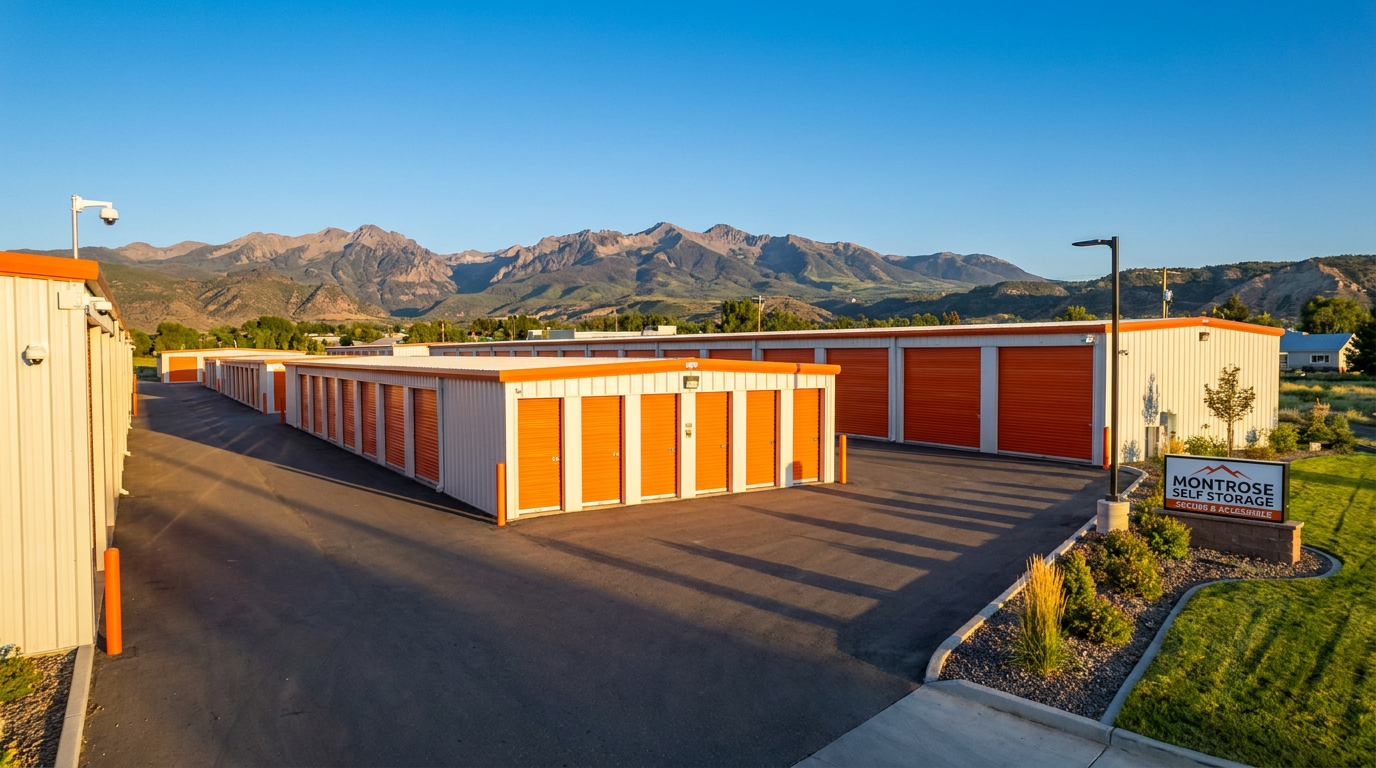
Locally owned facilities like Montrose Self Storage often waive deposit requirements, reducing your upfront costs compared to national chains that standardize deposit policies across all locations.
Insurance Requirements
Most storage facilities require proof of insurance covering your RV while in storage. Your existing RV insurance policy may include storage coverage, but some policies reduce coverage when vehicles remain stationary for extended periods.
Contact your insurance provider to confirm storage coverage limits and any requirements for facility security features. Some insurers offer premium discounts of 5% to 15% for RVs stored in covered or enclosed facilities with surveillance systems.
Utility and Service Add-Ons
Electrical hookups for battery maintenance or climate control systems typically add $15 to $40 monthly to your storage cost. This feature proves valuable for RVs with residential refrigerators, solar charging systems, or battery banks that require periodic charging.
Some facilities offer wash stations, dump stations, or air compressor access as included amenities or paid add-ons. These services add convenience but may not justify premium pricing if you have access to these facilities elsewhere.
Preparing Your RV for Storage
Proper preparation before storage prevents damage and ensures your RV remains ready for your next adventure. These steps apply regardless of whether you choose covered or uncovered parking.
Exterior Preparation
Wash and wax your RV before storage to remove contaminants that can damage finishes during extended parking. Apply UV protectant to rubber seals, tires, and any exposed plastic components.
Inspect roof seams and apply sealant to any areas showing wear or separation. This 30-minute inspection can prevent water intrusion that causes thousands in interior damage during storage.
Interior and Mechanical Preparation
Remove all food items and thoroughly clean interior surfaces to prevent pest infestations. Leave cabinet doors and refrigerator doors slightly open to promote air circulation and prevent mold growth.
For storage exceeding 30 days, add fuel stabilizer to your tank and run the engine or generator for 10 to 15 minutes to distribute treated fuel through the system. Disconnect batteries or connect them to a maintenance charger if electrical hookups are available.
Frequently Asked Questions About RV Storage in Montrose
Is covered RV storage worth the extra cost in Montrose, CO?
Covered storage is worth the additional $30 to $75 monthly for RVs stored longer than three months. The Western Slope's intense UV exposure and hail risk make covered parking a cost-effective way to prevent damage that would exceed the premium within a single season.
How much does RV storage cost in Montrose, CO?
RV storage in Montrose ranges from $30 to $100 monthly for uncovered parking and $75 to $200 for covered spaces. Enclosed storage, when available, costs $150 to $350 per month. Prices vary based on space size, security features, and facility location.
What security features should RV storage have?
Essential security features include gated access with individual PIN codes, HD surveillance cameras with 30-day recording retention, perimeter fencing at least 6 feet tall, and adequate LED lighting throughout the property. On-site management during business hours provides additional oversight.
How big of a storage space do I need for my RV?
Your storage space should measure 3 to 5 feet longer than your RV's total length, including hitch, bumper extensions, and any mounted accessories. A 25-foot travel trailer typically needs a 30-foot space, while a 35-foot motorhome requires 40 feet or more.
Is uncovered RV parking safe for long-term storage?
Uncovered parking is safe from a security standpoint at quality facilities with proper fencing and surveillance. However, long-term uncovered storage exposes your RV to UV damage, hail, and weather deterioration that can significantly reduce its value and lifespan over 2 to 5 years.
Should I store my RV covered or uncovered in Colorado?
Choose covered storage if your RV will sit unused for more than 60 days, has a value exceeding $15,000, or features rubber roofing susceptible to UV degradation. Uncovered parking works for frequently used rigs, lower-value trailers, or short-term storage between trips.
Making Your Storage Decision
The right RV storage choice balances protection needs against budget constraints. For most Montrose RV owners, covered storage provides the optimal combination of weather protection and reasonable cost, particularly for vehicles stored through winter months or summer hail season.
Browse all four Montrose storage locations to compare available options, or use the storage unit size guide to determine the right space for your specific RV. With month-to-month leases and no deposit requirements, you can adjust your storage solution as your needs change throughout the year.
|