How to Organize a Storage Unit for Easy Access: Complete Guide |
| HOW TO ORGANIZE A STORAGE UNIT FOR EASY ACCESS
⏱ 15 min read ·
📄 #2,923 words
Learn proven strategies to organize your storage unit for quick retrieval. Expert tips on layout planning, labeling systems, and maximizing vertical space.
|
O rganizing a storage unit for easy access requires creating a center aisle, placing frequently used items near the front, labeling every box on multiple sides, and using uniform containers that stack safely. A well-organized 10x10 unit takes 2 to 3 hours to set up properly but saves 15 to 30 minutes on every future visit.
| Key Points: | |
|---|---|
| • | Create a 2 to 3 foot center aisle from door to back wall for full unit access |
| • | Place items you need monthly near the front; items accessed yearly go in back corners |
| • | Label boxes on three sides with category, contents, and room or owner name |
| • | Use freestanding metal shelving rated for 150 to 200 pounds per shelf for vertical storage |
| • | Maintain a simple inventory list with box numbers and locations to find items in under 5 minutes |
Why Most Storage Units Become Inaccessible Within 6 Months
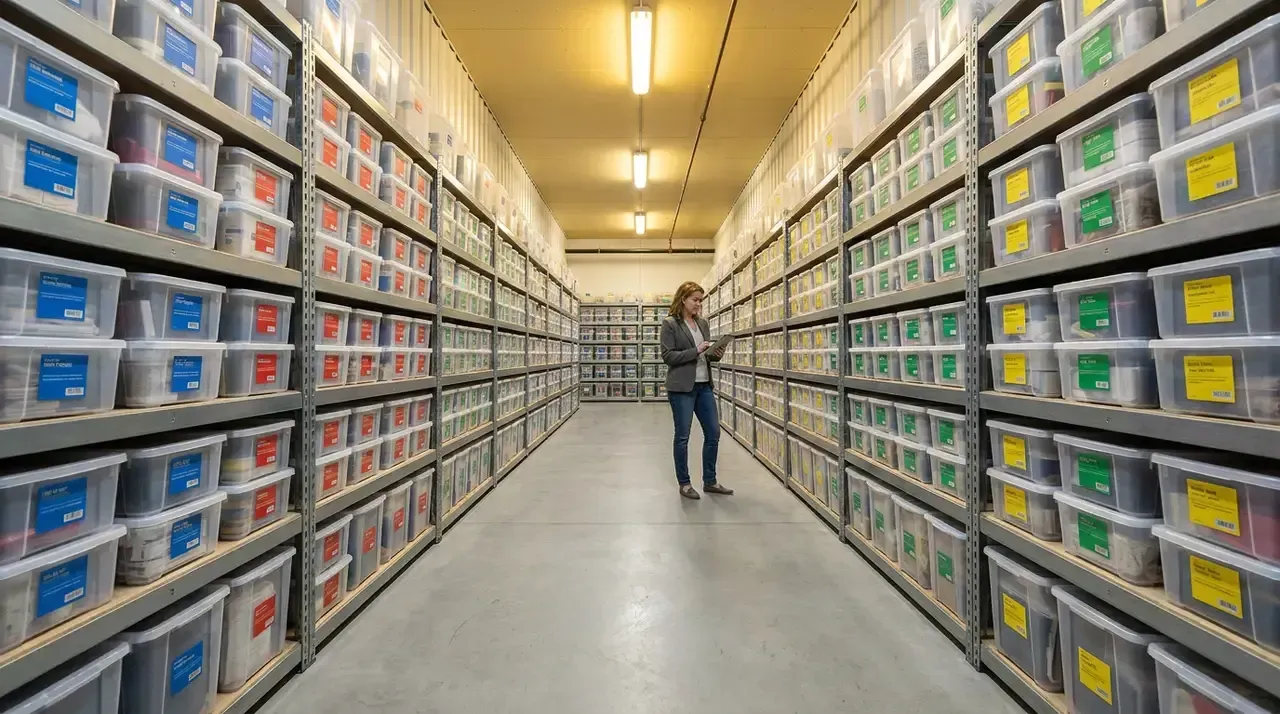
According to the Self Storage Association, approximately 10.6% of American households rent a storage unit. Yet industry surveys consistently show that 47% of renters cannot find specific items without moving multiple boxes. The problem is not the storage unit itself but the lack of an organizational system before move-in day.
The most common storage unit mistakes include stacking boxes without labels, blocking access to back items with furniture, and failing to leave walkways. These errors compound over time. Each visit becomes a frustrating excavation project rather than a quick retrieval.
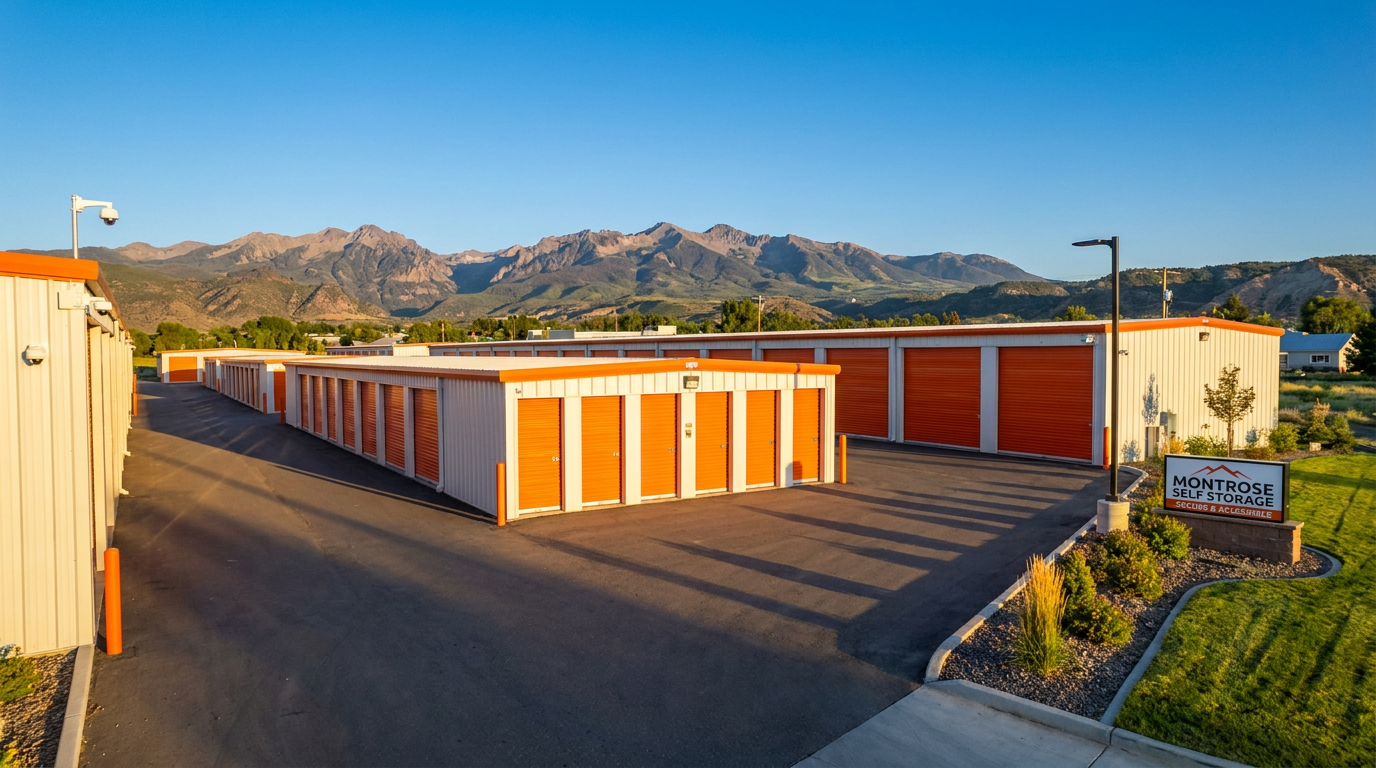
Montrose Self Storage customers on Colorado's Western Slope face additional challenges. Seasonal gear for skiing near Telluride, camping equipment for Black Canyon trips, and holiday decorations all compete for space. Without a system, that snowboard you need in December ends up buried behind summer camping gear.
The 4 D's of Self Storage Organization
Professional organizers from the National Association of Productivity and Organizing Professionals recommend the 4 D's framework before loading a single box: Declutter, Designate, Distribute, and Document. This system reduces storage costs by 15 to 25% by eliminating unnecessary items and right-sizing your unit.
Declutter Before You Store
Every item in storage costs money. A 10x10 drive-up unit in Montrose runs $62 to $165 per month depending on location and current promotions. Storing items worth less than their annual storage cost makes no financial sense. Donate, sell, or recycle anything you have not used in 24 months.
Colorado's dry climate means garage sale season runs April through October. Facebook Marketplace and Craigslist move items quickly in the Montrose, Delta, and Ouray areas. Local charities including Habitat for Humanity ReStore accept furniture, appliances, and building materials.
Designate Categories
Group items into 5 to 8 distinct categories based on how you will retrieve them. Effective categories include: seasonal clothing, holiday decorations, sporting equipment, business inventory, documents and records, furniture, and keepsakes. Each category gets its own zone in your unit.
Distribute by Access Frequency
Items you access monthly belong within arm's reach of the door. Quarterly items go mid-unit. Annual items occupy back corners. This distribution pattern means 80% of your visits require accessing only 20% of your unit's depth.
Document Everything
A simple inventory transforms random boxes into a searchable system. Number each box and record its contents in a spreadsheet or notes app. Include the box's location using a grid system: A1 means left wall, front row; C3 means right wall, third row back.
Planning Your Storage Unit Layout Before Move-In
Sketch your unit's dimensions before loading day. A 10x10 unit provides 100 square feet; a 10x20 offers 200 square feet comparable to a one-car garage. Subtract 15 to 20% for your access aisle, leaving 80 to 85 square feet of actual storage in a 10x10.
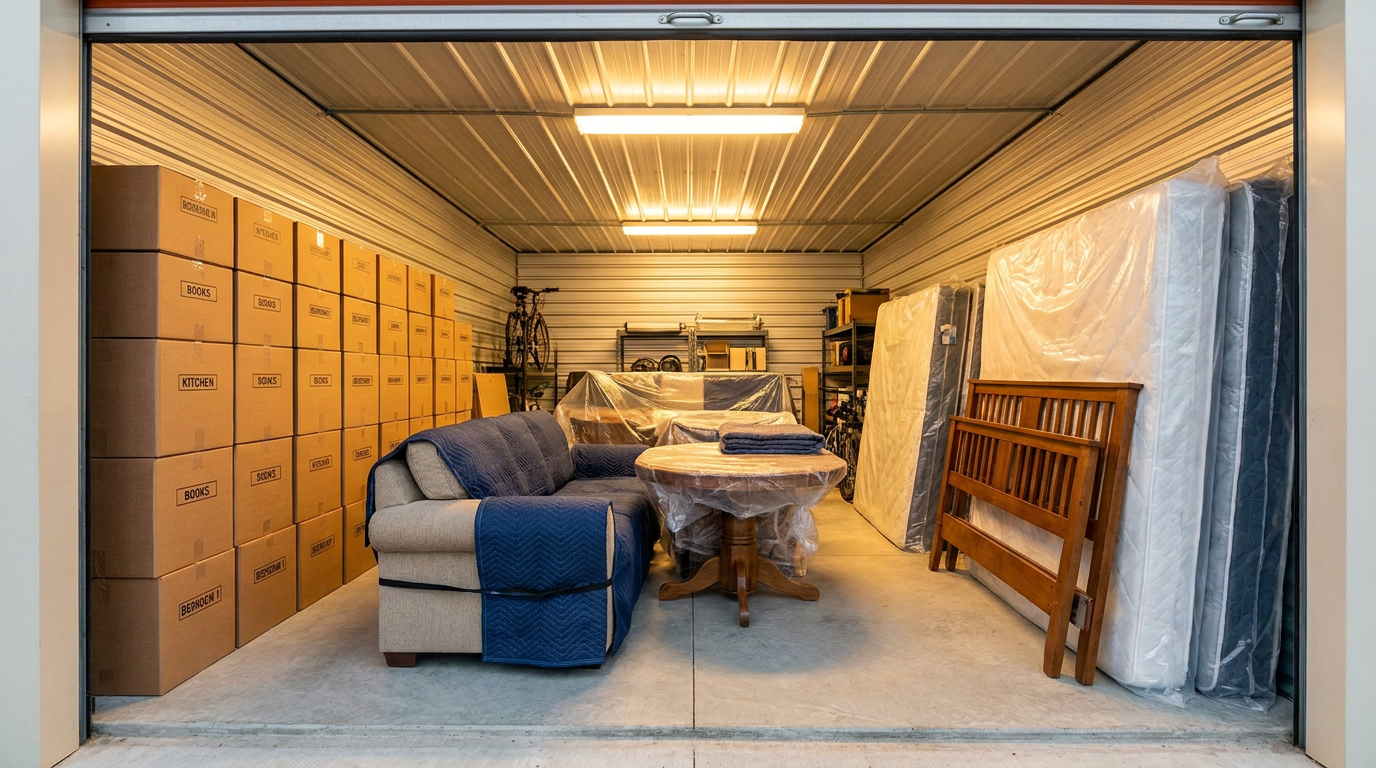
The most efficient layout places tall furniture and shelving units along the side walls, creating a natural corridor down the center. Leave 24 to 36 inches for your aisle; anything narrower makes moving boxes awkward and increases injury risk.
| Unit Size | Total Square Feet | Usable Storage (with aisle) | Best For |
|---|---|---|---|
| 5x5 | 25 sq ft | 20 to 22 sq ft | Seasonal items, small furniture |
| 5x10 | 50 sq ft | 40 to 45 sq ft | One-bedroom apartment contents |
| 10x10 | 100 sq ft | 80 to 85 sq ft | Two to three bedroom home |
| 10x20 | 200 sq ft | 165 to 175 sq ft | Four bedroom home or business inventory |
| 10x25 | 250 sq ft | 210 to 220 sq ft | Vehicle storage plus household items |
Not sure which size fits your needs? The Montrose Self Storage size guide provides visual comparisons showing exactly how much furniture and boxes fit in each unit type.
Choosing the Right Containers for Visibility and Protection
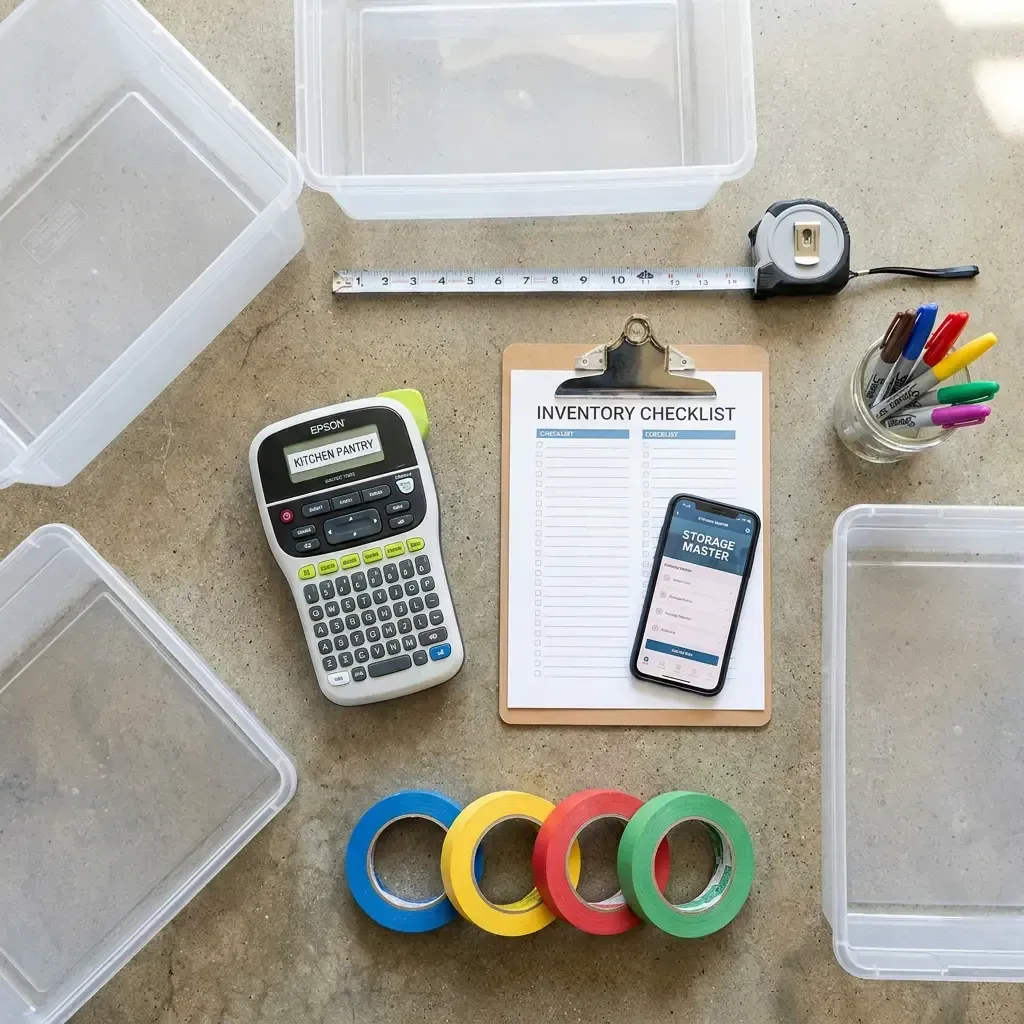
Container selection directly impacts both accessibility and item protection. The wrong containers create unstable stacks, hide contents, and fail to protect against dust and humidity. According to Extra Space Storage research, uniform containers improve stacking stability by 40% compared to mixed box sizes.
Clear Plastic Bins for Frequently Accessed Items
Clear 18 to 27 gallon bins from Sterilite, Rubbermaid, or IRIS allow instant content identification without opening. These bins cost $8 to $15 each at Walmart, Target, or Home Depot. Their uniform dimensions stack three to four high safely, maximizing vertical space.
Reserve clear bins for items you access quarterly or more often: seasonal clothing, holiday decorations, sporting gear, and craft supplies. The transparency eliminates guesswork during retrieval visits.
Heavy-Duty Cardboard for Long-Term Storage
Banker's boxes and medium moving boxes work well for items accessed annually or less. Choose boxes rated for 65 pounds or more. U-Haul medium boxes measure 18x18x16 inches and cost $2.50 to $3.50 each. Their uniform size stacks efficiently and fits standard shelving.
Reinforce cardboard box bottoms with packing tape in an H-pattern. This prevents blowouts when lifting loaded boxes and extends box life from 2 years to 5 years or more.
Specialty Containers for Specific Items
Wardrobe boxes with hanging rods protect suits, dresses, and coats without folding. Dish pack boxes include cell dividers for glassware and ceramics. File storage boxes fit legal and letter-size documents with built-in handles for easy carrying.
For Colorado outdoor enthusiasts, dedicated ski and snowboard bags protect equipment from dust and scratches. Fishing rod tubes prevent tip damage. Tent bags with mesh panels allow moisture to escape after camping trips.
The Labeling System That Eliminates Searching
Labeling is the single highest-impact organization technique. A box without a label is a mystery box that requires opening to identify. According to SmartStop Self Storage, proper labeling reduces average retrieval time from 25 minutes to under 5 minutes.
The Three-Sided Labeling Method
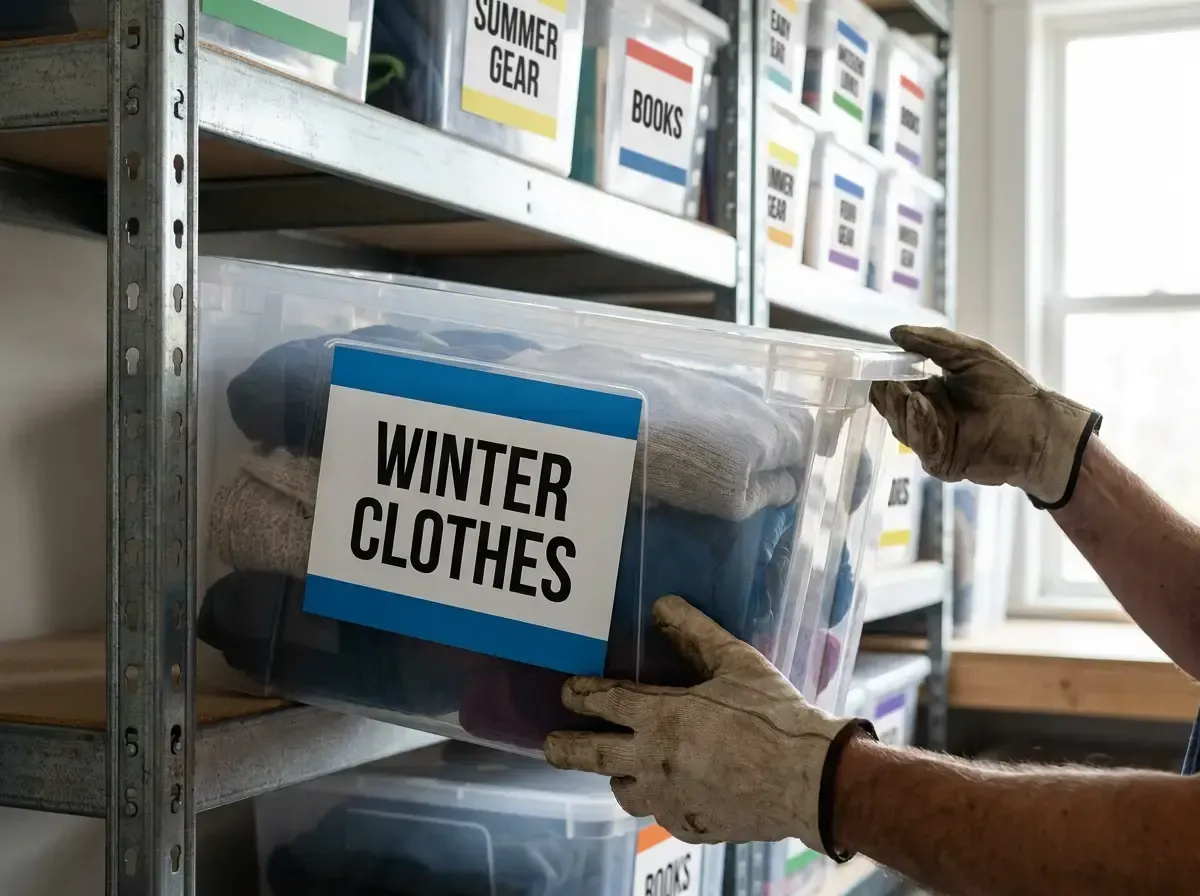
Label every box on the top and two adjacent sides. This ensures at least one label remains visible regardless of how boxes get stacked or rotated. Use 4x6 inch shipping labels or wide masking tape with permanent marker.
Each label should include three pieces of information: category (Holiday Decor), key contents (Tree Lights, Stockings, Ornaments), and owner or room designation (Living Room or Emma's Items). This triple-layer identification speeds retrieval dramatically.
Color-Coding by Category
Assign a colored tape or label to each category. Red for holiday items. Blue for kitchen. Green for outdoor gear. Yellow for documents. This visual system allows instant category identification from across the unit.
Purchase colored duct tape in bulk from Amazon or office supply stores. A six-roll multipack costs $15 to $20 and covers 50 to 100 boxes. The investment pays for itself in time saved during the first few retrieval visits.
Numbering System for Inventory Tracking
Number each box sequentially: Box 1, Box 2, Box 3. Record the number, category, and detailed contents in a spreadsheet or notes app. Include the box's grid location in your unit (A1, B2, C3). Update this inventory whenever you add or remove items.
Google Sheets or Apple Notes sync across devices, making your inventory accessible from your phone while standing in your storage unit. Some renters photograph box contents before sealing and attach the image to their inventory entry.
Maximizing Vertical Space Safely
Most storage units offer 8 to 10 feet of ceiling height. Using only floor space wastes 60 to 70% of available volume. Vertical organization doubles or triples effective capacity while maintaining easy access to all items.
Freestanding Shelving Units
Metal wire shelving from Costco, Home Depot, or Amazon costs $50 to $150 per unit and holds 150 to 350 pounds per shelf. A 48-inch wide, 72-inch tall unit with five shelves creates 20 linear feet of accessible storage without stacking boxes.
Position shelving along side walls, leaving the center aisle clear. Anchor tall units to the wall if your facility permits, or place heaviest items on bottom shelves for stability. Climate-controlled units at locations like the N 9th Street facility often have taller ceilings ideal for maximizing shelving.
Safe Stacking Principles
Stack heaviest boxes on the bottom, lightest on top. Never stack boxes more than five high without shelving support. Keep the heaviest items at waist level (24 to 48 inches) to reduce lifting strain and injury risk.
Uniform box sizes stack more safely than mixed sizes. A tower of identical 18x18x16 boxes remains stable; mixing small boxes on large creates tipping hazards. If you must mix sizes, place larger boxes on bottom and smaller boxes on top.
Using Furniture as Storage
Dressers, filing cabinets, and nightstands contain usable drawer space. Fill drawers with lightweight items like linens, clothing, or documents before moving furniture into storage. Label each drawer's contents on the furniture's exterior.
Hollow furniture legs, table interiors, and cabinet shelves all represent usable volume. Slide flat items like mirrors, artwork, and headboards into gaps between furniture and walls. These hidden spaces add 10 to 15% more capacity.
Strategic Placement for Different Item Types
Different items require different handling based on fragility, access frequency, and protection needs. Strategic placement prevents damage while ensuring easy retrieval.
Furniture and Large Items
Stand mattresses vertically against walls in mattress bags to save floor space. A queen mattress laid flat consumes 33 square feet; standing vertically uses only 5 square feet. Mattress bags cost $5 to $15 and protect against dust and moisture.
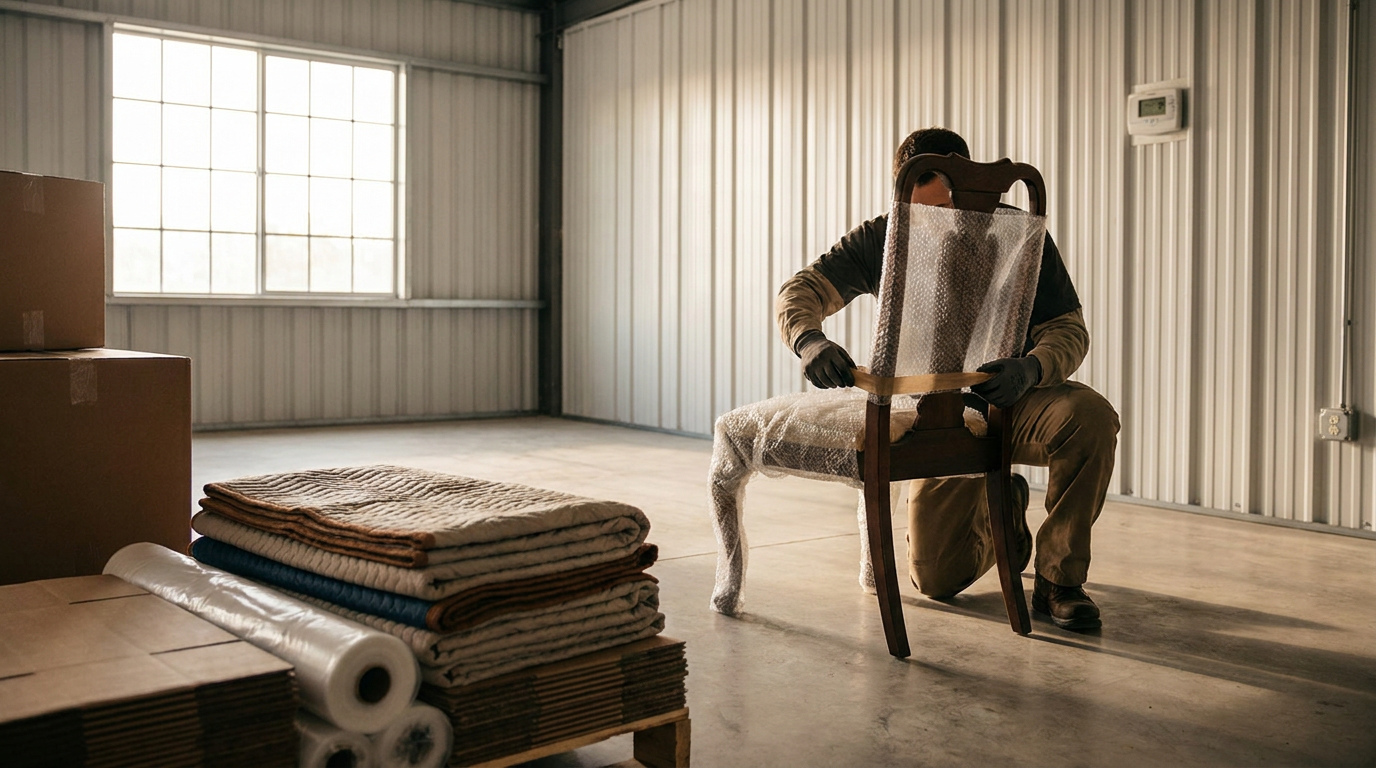
Disassemble tables, bed frames, and shelving units. Keep hardware in labeled plastic bags taped to the main furniture piece. This prevents lost screws and simplifies reassembly months or years later.
Sofas and large chairs go against back walls. Use the space beneath raised furniture for flat items like rugs, area mats, or boxed artwork.
Seasonal and Outdoor Gear
Western Slope residents store significant seasonal equipment. Ski and snowboard gear belongs in labeled bins near the front during fall and winter months. After ski season, rotate these bins to the back and move camping, fishing, and hiking gear forward.
Holiday decorations follow the same rotation principle. Christmas items move forward in October, back in January. Summer decorations and outdoor furniture shift seasonally. This rotation takes 30 to 45 minutes twice yearly but eliminates digging through the entire unit.
Documents and Business Inventory
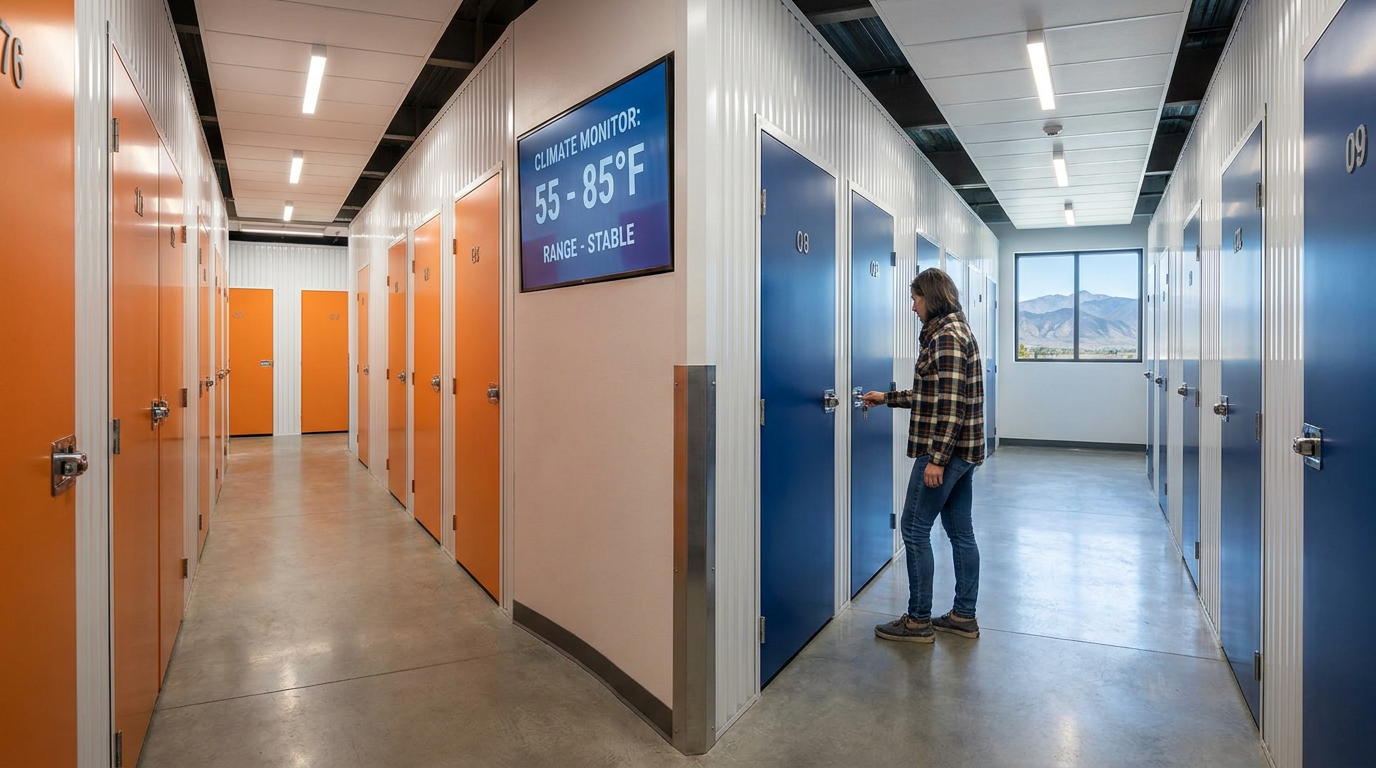
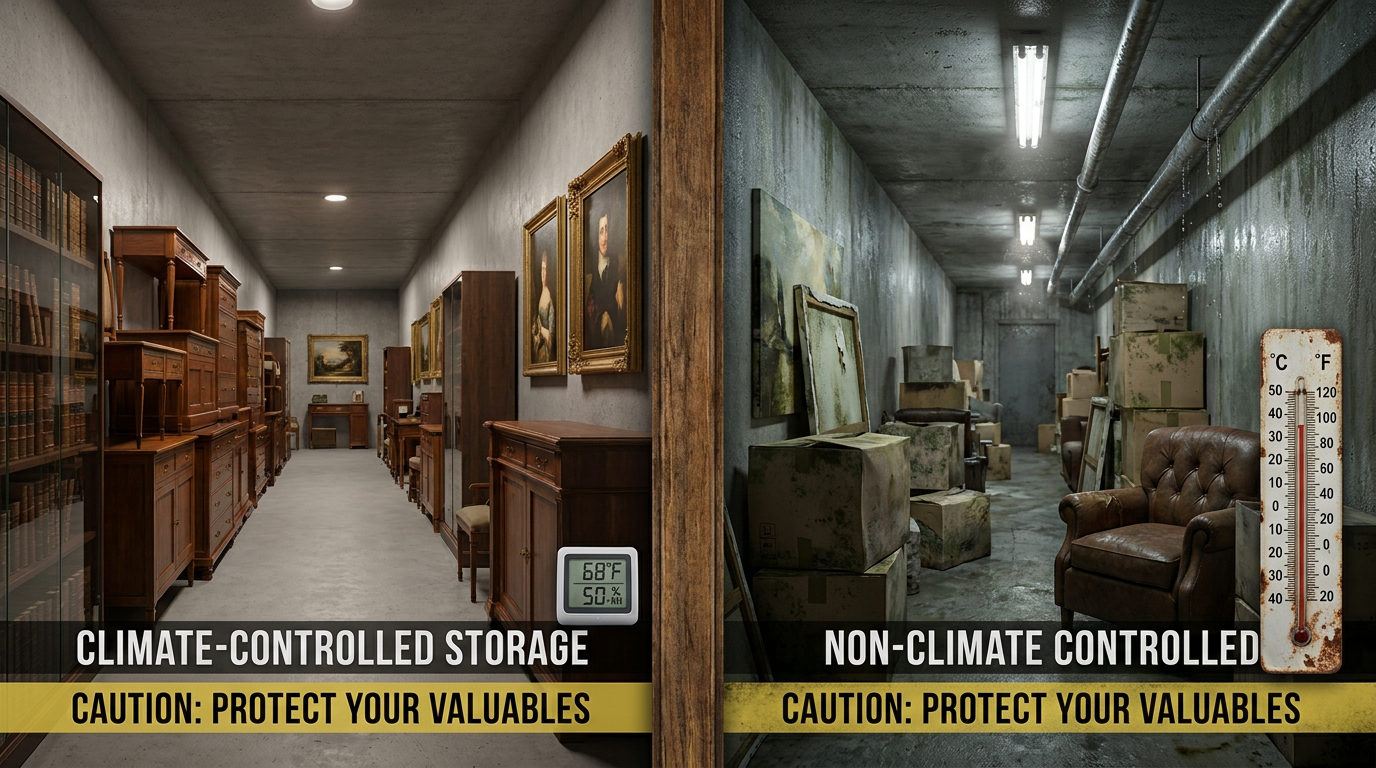
Paper documents, photographs, and business records require climate-controlled storage to prevent moisture damage and yellowing. Temperatures between 55 and 80 degrees Fahrenheit with 30 to 50% humidity protect paper indefinitely.
Store documents in acid-free archival boxes on shelving, never on concrete floors where moisture can wick upward. Business inventory that turns over frequently belongs on front shelving with clear labeling by SKU or product category.
Climate Considerations for Colorado Storage
Montrose experiences temperature swings from below zero in winter to above 95 degrees in summer. Standard drive-up units follow outdoor temperature patterns. Climate-controlled units maintain 55 to 80 degrees year-round.
Items Requiring Climate Control
Electronics, musical instruments, photographs, artwork, leather furniture, wine, and candles all require stable temperatures. Extreme heat melts candles and warps vinyl records. Extreme cold cracks leather and damages LCD screens.
If storing items worth more than $2,000 or with sentimental value that cannot be replaced, climate-controlled storage provides essential protection. The climate-controlled units on N 9th Street start at $71 per month for a 4x5 space.
Protecting Items in Standard Units
Standard drive-up units work well for durable items: metal tools, outdoor furniture, sporting equipment, and sturdy furniture. Use plastic bins with tight-fitting lids to protect against dust and minor humidity fluctuations.
Elevate items on pallets or 2x4 lumber to prevent ground moisture contact. Leave 2 to 3 inches between items and exterior walls for air circulation. Avoid storing food, candles, or anything that attracts pests.
Creating and Maintaining Your Inventory System
An inventory system transforms your storage unit from a black hole into a searchable database. The initial setup takes 1 to 2 hours but saves countless hours over months and years of storage.
Basic Spreadsheet Inventory
Create columns for: Box Number, Category, Contents Summary, Location in Unit, Date Stored, and Notes. Populate this as you load your unit. A 10x10 unit typically contains 30 to 50 boxes and items requiring 30 to 60 inventory entries.
Store your inventory in Google Sheets, Apple Notes, or any cloud-synced app accessible from your phone. Print a backup copy and tape it inside the unit door for reference without internet access.
Photo Documentation
Photograph box contents before sealing. Photograph your completed unit layout from the doorway. These images serve as visual inventory and support insurance claims if needed.
Organize photos in a dedicated phone album or Google Photos folder labeled with your unit number. Update photos whenever you reorganize or add items.
Quarterly Maintenance Visits
Schedule a 30-minute maintenance visit every 3 months. Check for moisture, pest activity, or shifting stacks. Remove items you no longer need. Update your inventory. Rotate seasonal items as appropriate.
These maintenance visits prevent small problems from becoming large ones. A minor leak caught early saves thousands in damaged belongings. Questions about access or your account? The Montrose Self Storage FAQ covers common renter questions.
Drive-Up vs. Indoor Unit Organization Strategies
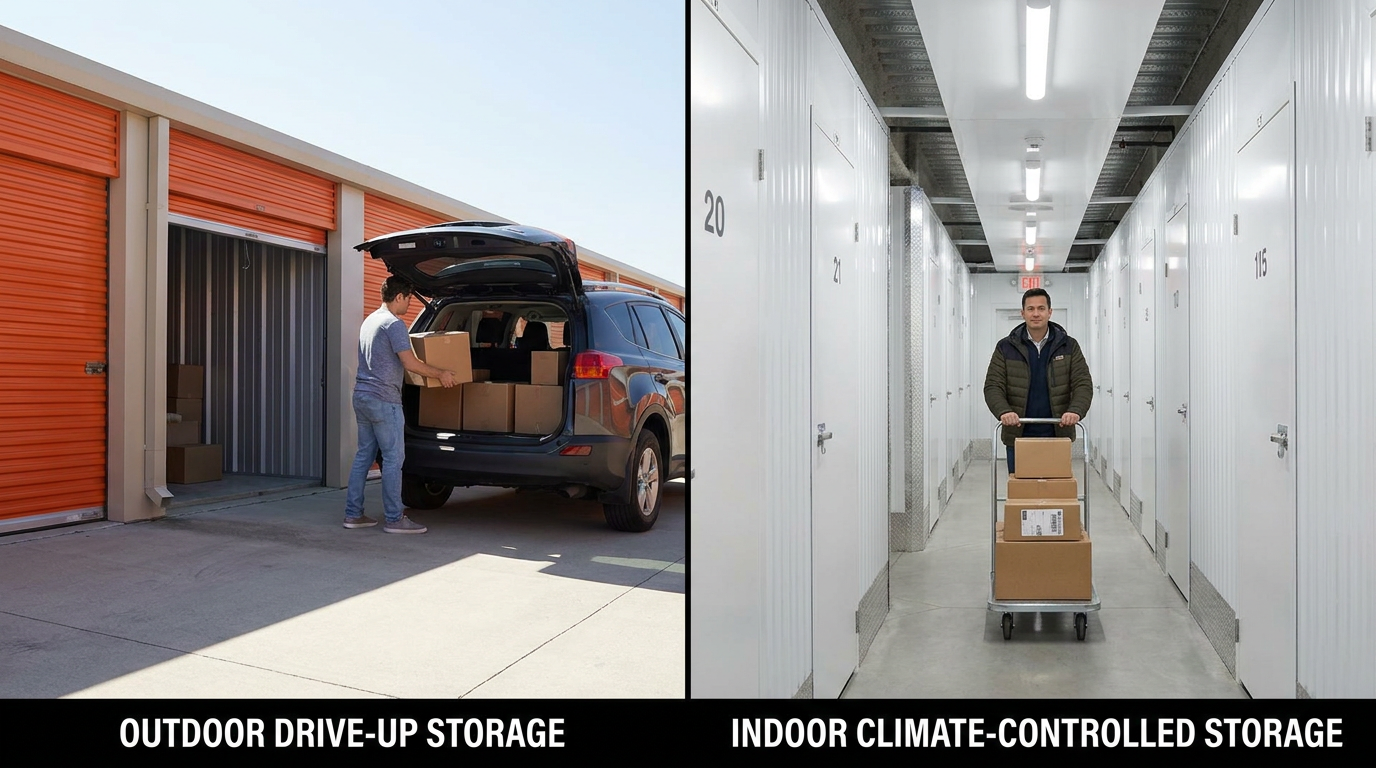
Unit type affects your organizational approach. Drive-up units allow vehicle-to-unit loading; indoor units require carrying items through hallways. Each type has distinct advantages for different storage needs.
Organizing Drive-Up Units
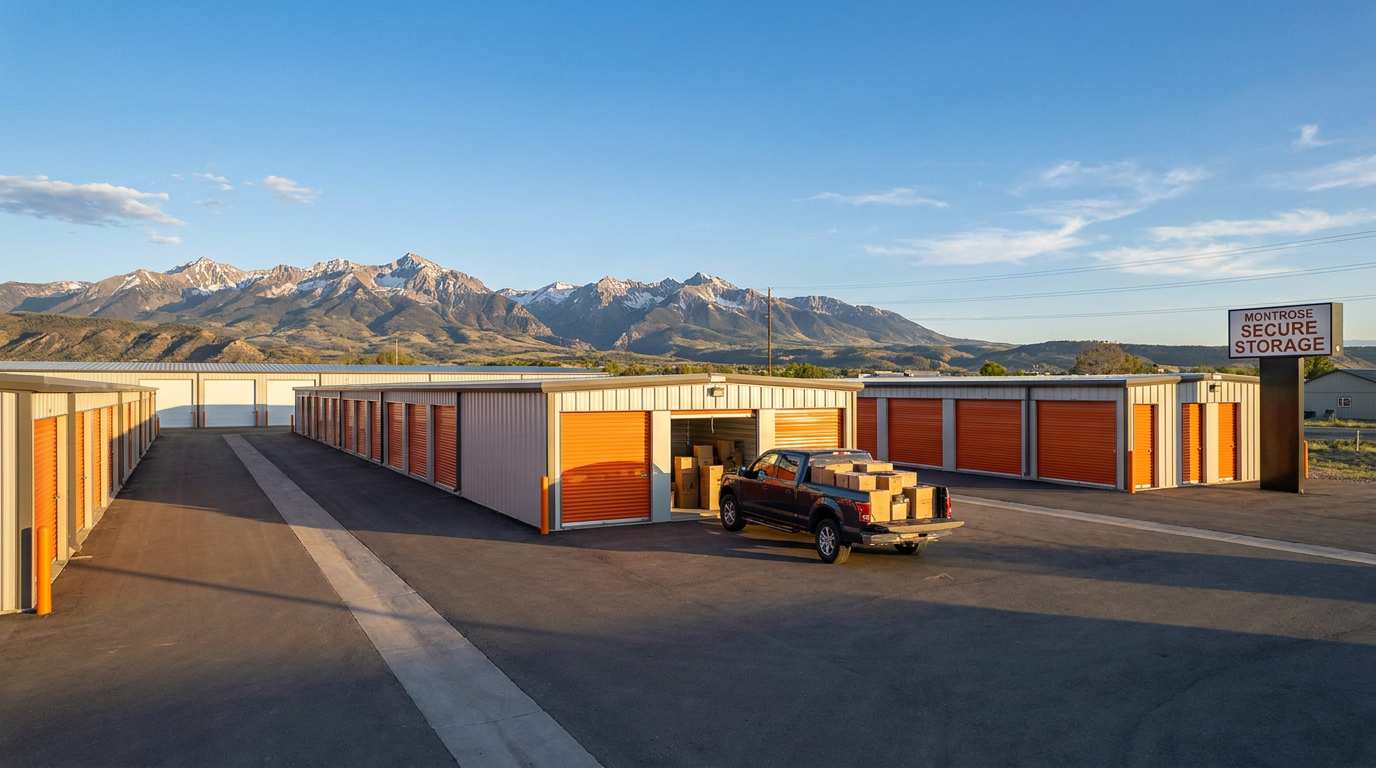
Drive-up access at facilities like Spring Creek or Fruit Park allows backing your vehicle directly to the unit door. This convenience supports heavier items and frequent access.
Keep a hand truck or furniture dolly inside your drive-up unit for moving heavy boxes. Position frequently accessed items within arm's reach of the door. Use the front third of the unit as your active zone for items you retrieve monthly.
Organizing Indoor Units
Indoor units require carrying items from parking areas through hallways. This makes heavy or bulky items more challenging but provides better protection from weather and temperature extremes.
Use smaller, lighter boxes in indoor units. A 40-pound box carried 100 feet becomes exhausting; a 25-pound box remains manageable. Invest in a quality folding hand cart that fits through hallways and elevators.
Frequently Asked Questions
What's the best way to organize a storage unit?
The best method combines a center aisle for access, uniform labeled containers, freestanding shelving for vertical storage, and an inventory system. Place frequently accessed items near the front, rarely accessed items in back corners. This approach reduces retrieval time from 25 minutes to under 5 minutes according to industry data.
What are common storage unit mistakes?
The five most common mistakes include: failing to leave an access aisle (47% of renters make this error), not labeling boxes, stacking heavy items on top of fragile items, storing temperature-sensitive items in non-climate-controlled units, and failing to maintain an inventory. Each mistake compounds retrieval difficulty over time.
Is it a good idea to put clothes in storage?
Clothes store well in clean, dry conditions. Wash all items before storing to prevent stains from setting and odors from developing. Use vacuum storage bags to compress bulky items like winter coats and reduce required space by 50 to 75%. For storage exceeding 6 months, climate-controlled units prevent mildew and fabric degradation.
How do you maximize space in a small storage unit without losing access?
Maximize small unit space by using vertical shelving, uniform stackable containers, and furniture as storage. A 5x5 unit with a 72-inch shelving unit holds 3 times more accessible items than the same unit with floor stacking only. Maintain a 24-inch aisle even in small units to access back items without complete reorganization.
What is the best way to label and inventory items in a storage unit?
Label each box on three sides with category, contents, and owner. Number boxes sequentially and record details in a cloud-synced spreadsheet including box number, contents, and grid location. Color-code categories with tape for visual identification. This system locates any item in under 5 minutes.
Your Next Steps for an Organized Storage Unit
Organizing a storage unit for easy access requires upfront planning but pays dividends on every future visit. Start by decluttering before you store, reducing both the items and the unit size you need. Choose uniform containers, implement a three-sided labeling system, and maintain a simple inventory.
For Montrose and Western Slope residents, seasonal gear rotation keeps ski equipment, camping supplies, and holiday decorations accessible when you need them. Climate-controlled options protect valuable items from Colorado's temperature extremes.
Whether you need a compact 5x5 for seasonal items or a large 10x25 for vehicle storage, proper organization transforms your unit from a frustrating puzzle into an efficient extension of your home or business. Browse all four Montrose Self Storage locations to find the right unit for your needs.
|