Is Climate Controlled Storage Worth It? Cost vs. Value Guide |
| IS CLIMATE CONTROLLED STORAGE WORTH THE EXTRA COST?
⏱ 9 min read ·
📄 #1,691 words
Climate controlled storage costs $30-50 more monthly but prevents thousands in damage to furniture, electronics, and documents. See when it pays off.
|
C limate controlled storage is worth the extra cost when you store temperature-sensitive items like wood furniture, electronics, documents, or artwork for more than 30 days. The premium of $30 to $50 per month protects belongings that could suffer hundreds or thousands of dollars in damage from extreme heat, cold, or humidity fluctuations.
| Key Points: | |
|---|---|
| • | Climate controlled units maintain 55 to 80 degrees Fahrenheit year-round, preventing warping, cracking, and mold |
| • | Monthly cost premium averages 25 to 50 percent more than standard units, typically $30 to $50 extra |
| • | Essential for wood furniture, electronics, vinyl records, photographs, leather goods, and important documents |
| • | Montrose, Colorado experiences temperature swings from below zero to over 95 degrees Fahrenheit, making climate control critical for sensitive items |
| • | Break-even point: if stored items exceed $2,000 in value, climate control pays for itself in damage prevention |
What Climate Controlled Storage Actually Does
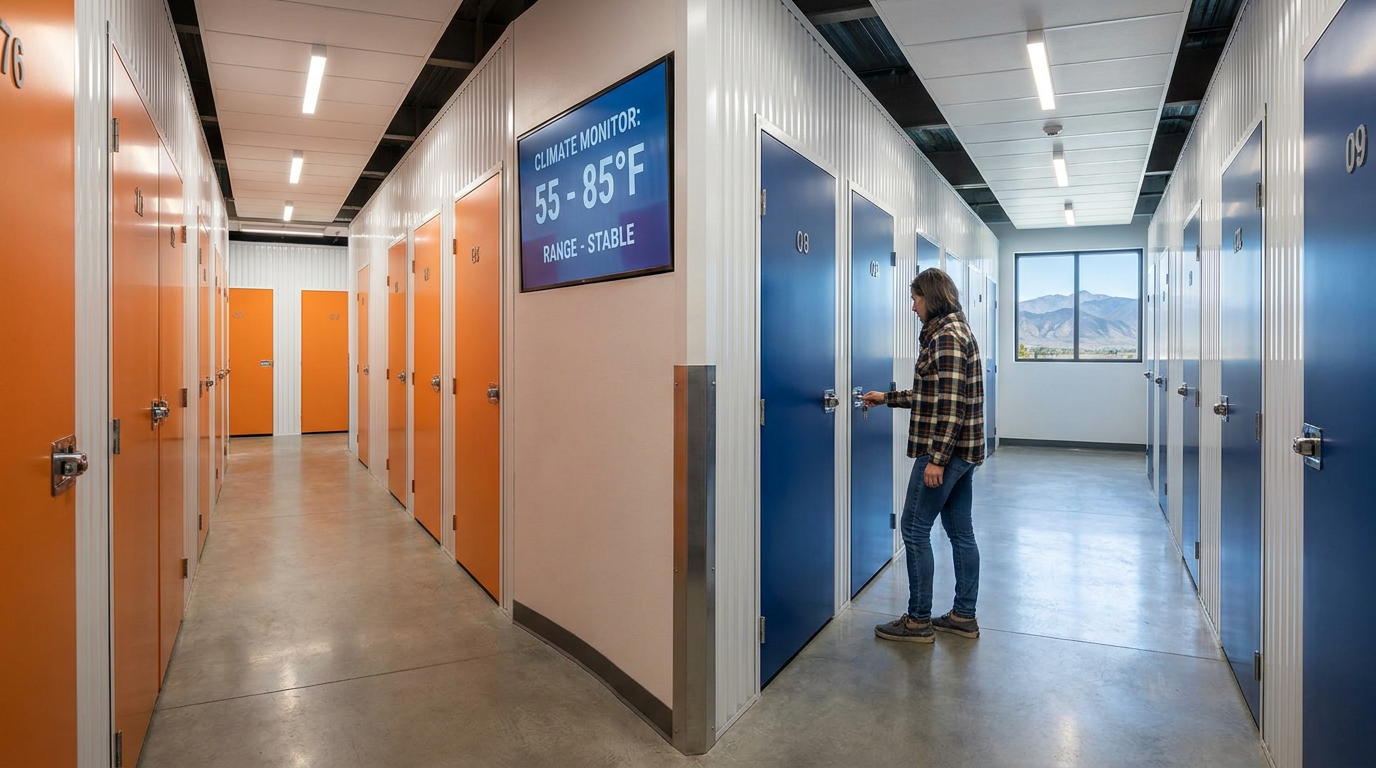
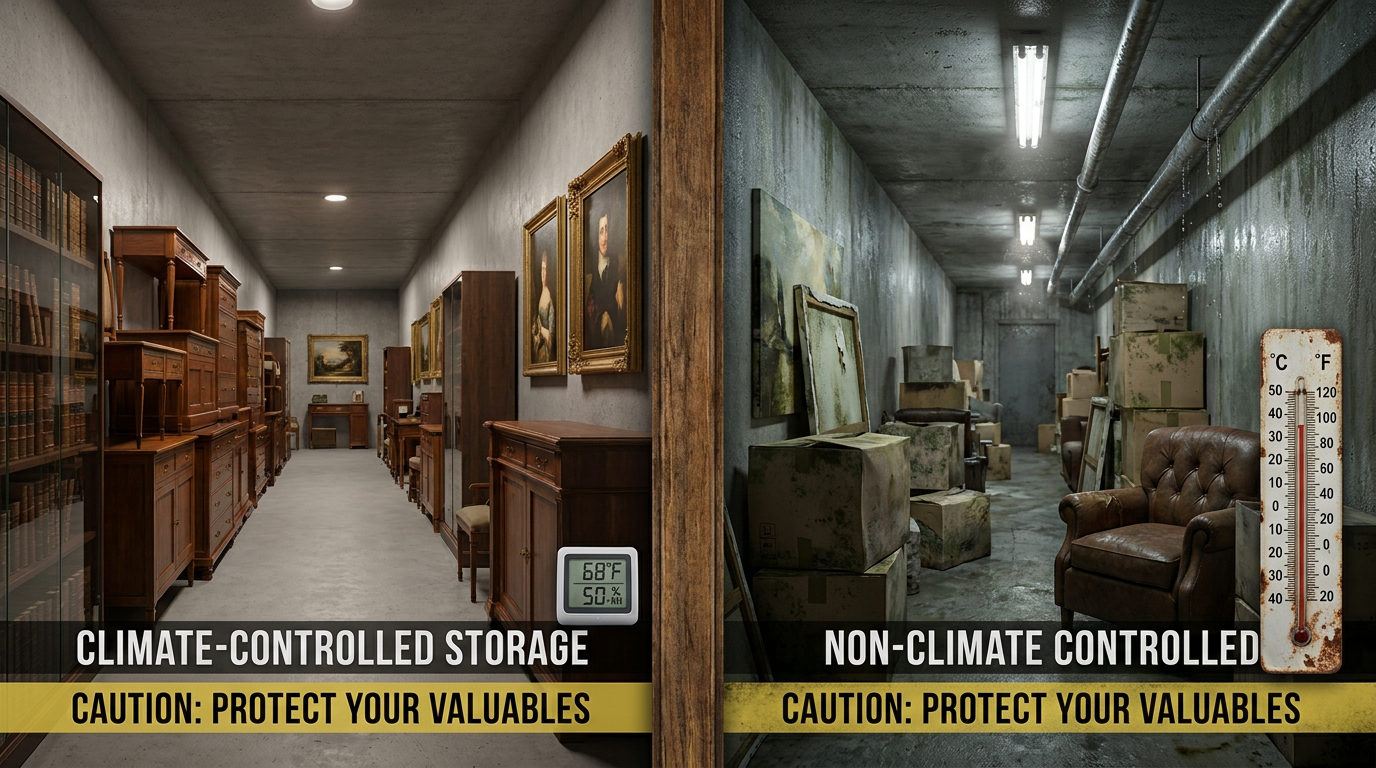
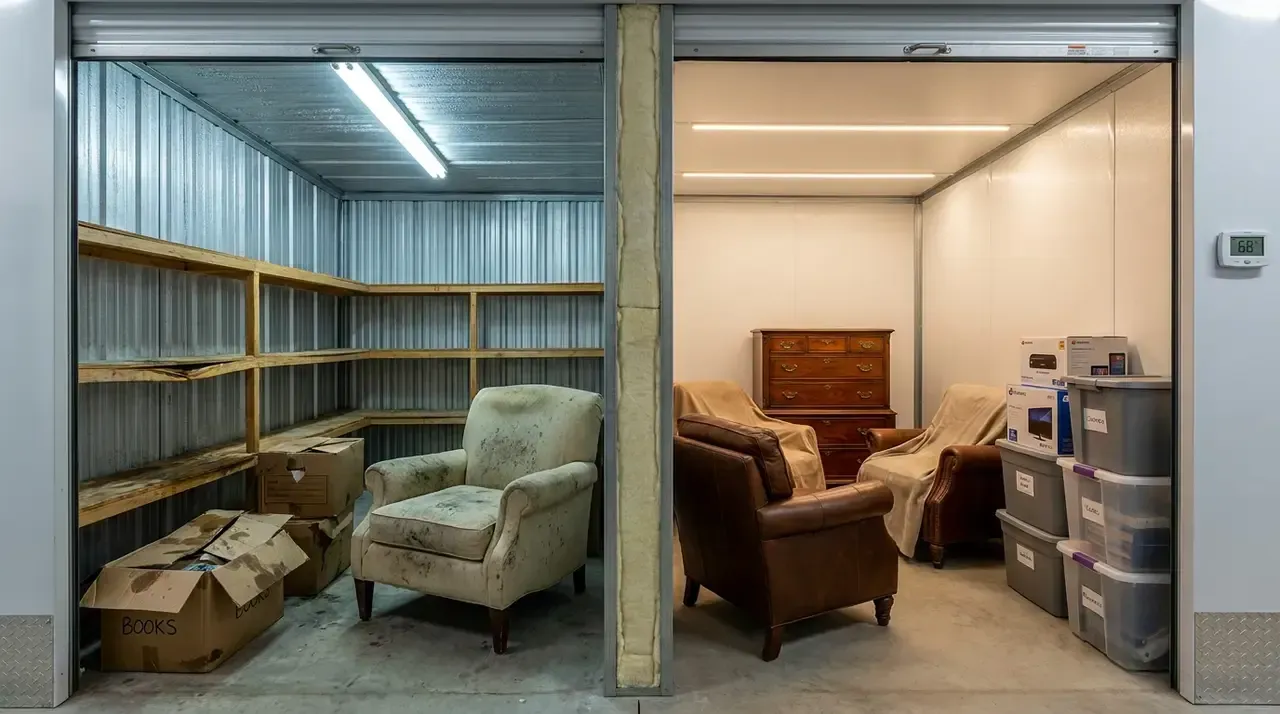
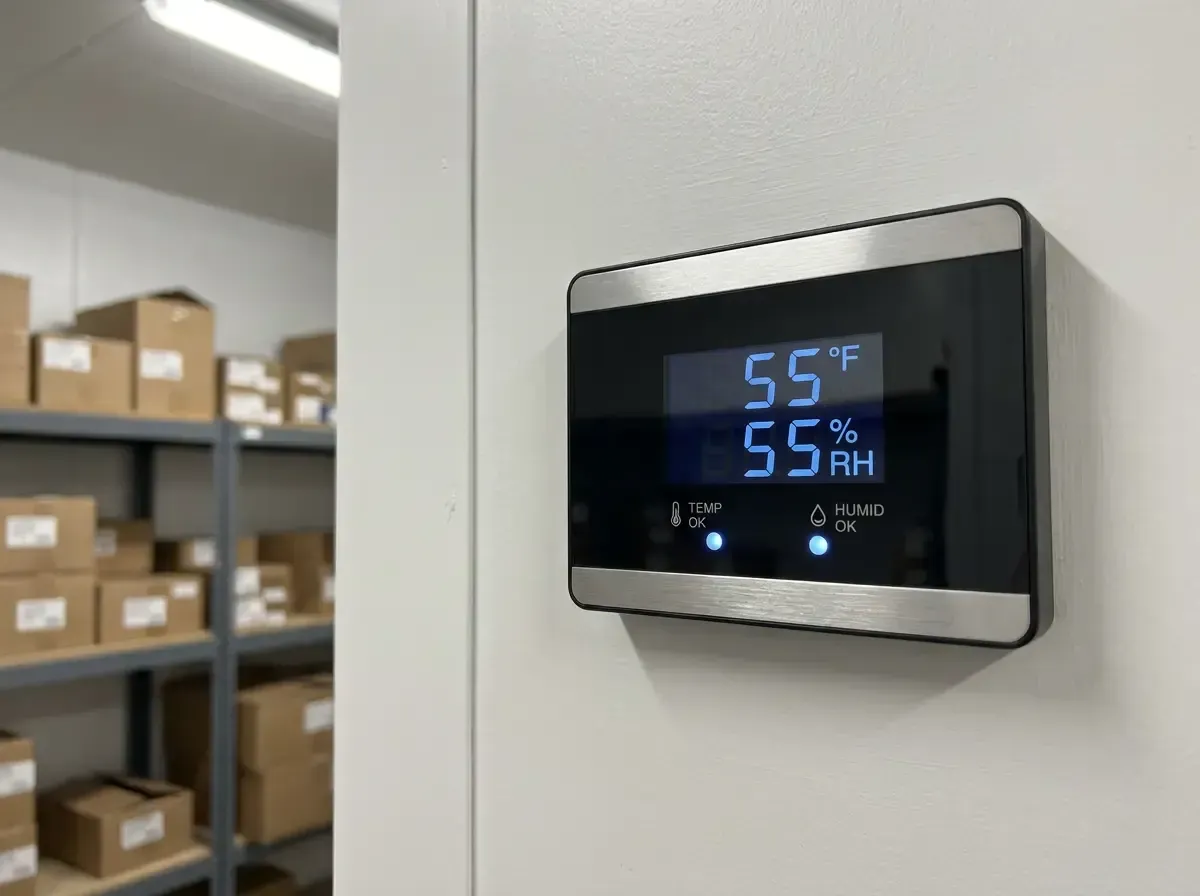
Climate controlled storage units maintain consistent temperatures between 55 and 80 degrees Fahrenheit throughout the year. According to Extra Space Storage's research, these units also regulate humidity levels between 30 and 50 percent, which prevents moisture damage that causes mold, mildew, and rust.
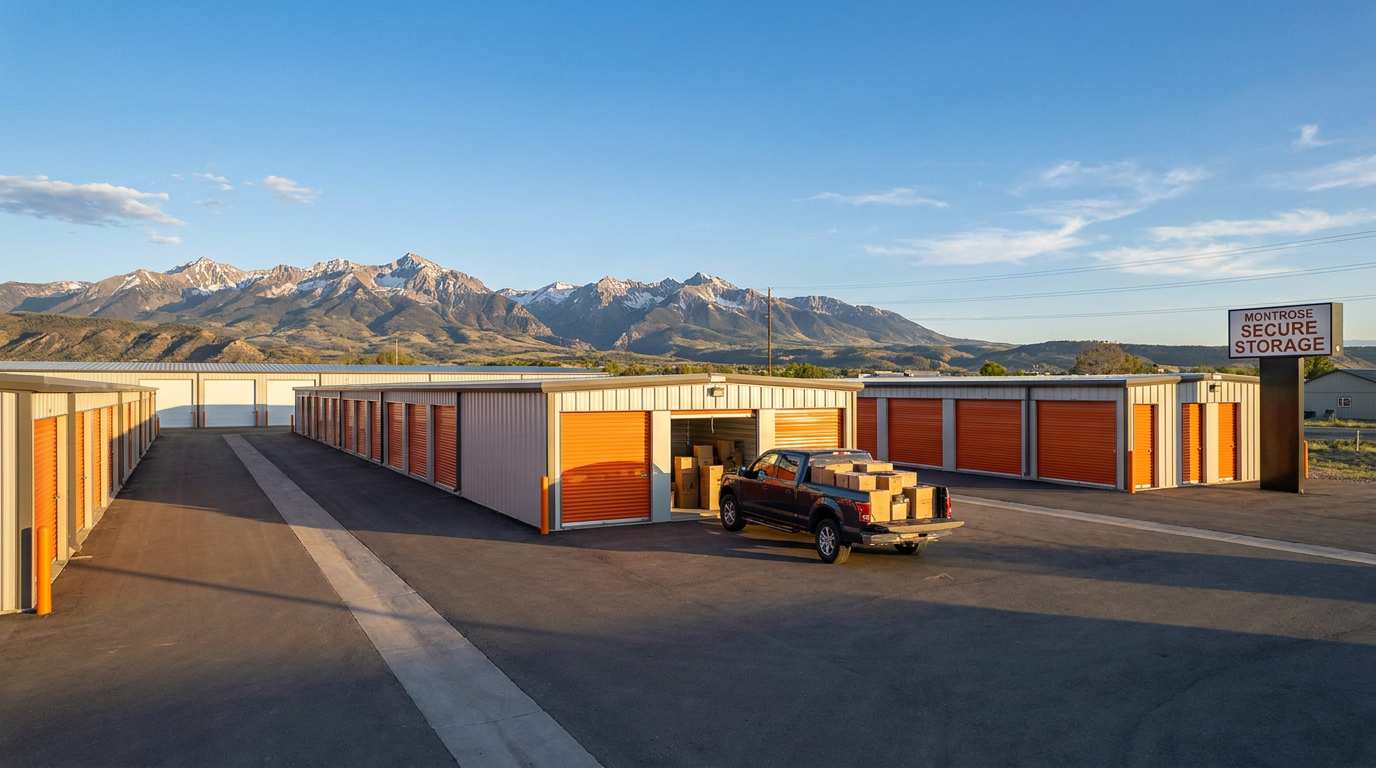
Standard drive-up units expose your belongings to whatever temperatures exist outside. In Western Colorado, that means summer highs exceeding 95 degrees and winter lows dropping well below freezing. These extremes cause wood to expand and contract, electronics to malfunction, and photographs to stick together permanently.
The temperature regulation happens through HVAC systems similar to those in homes and offices. Units are typically located inside larger buildings with insulated walls, providing an additional barrier against outdoor conditions.
Climate Controlled vs. Standard Storage: Cost Comparison
Understanding the actual price difference helps you make an informed decision. Here is how costs compare at Montrose Self Storage facilities:
| Unit Type | Size | Monthly Cost | Annual Cost |
|---|---|---|---|
| Climate Controlled Indoor | 4x5 | $71 | $852 |
| Interior Ground (Non-Climate) | 10x10 | $119 | $1,428 |
| Drive-Up Outdoor | 10x10 | $62 to $165 | $744 to $1,980 |
| Drive-Up Outdoor | 10x20 | $142 | $1,704 |
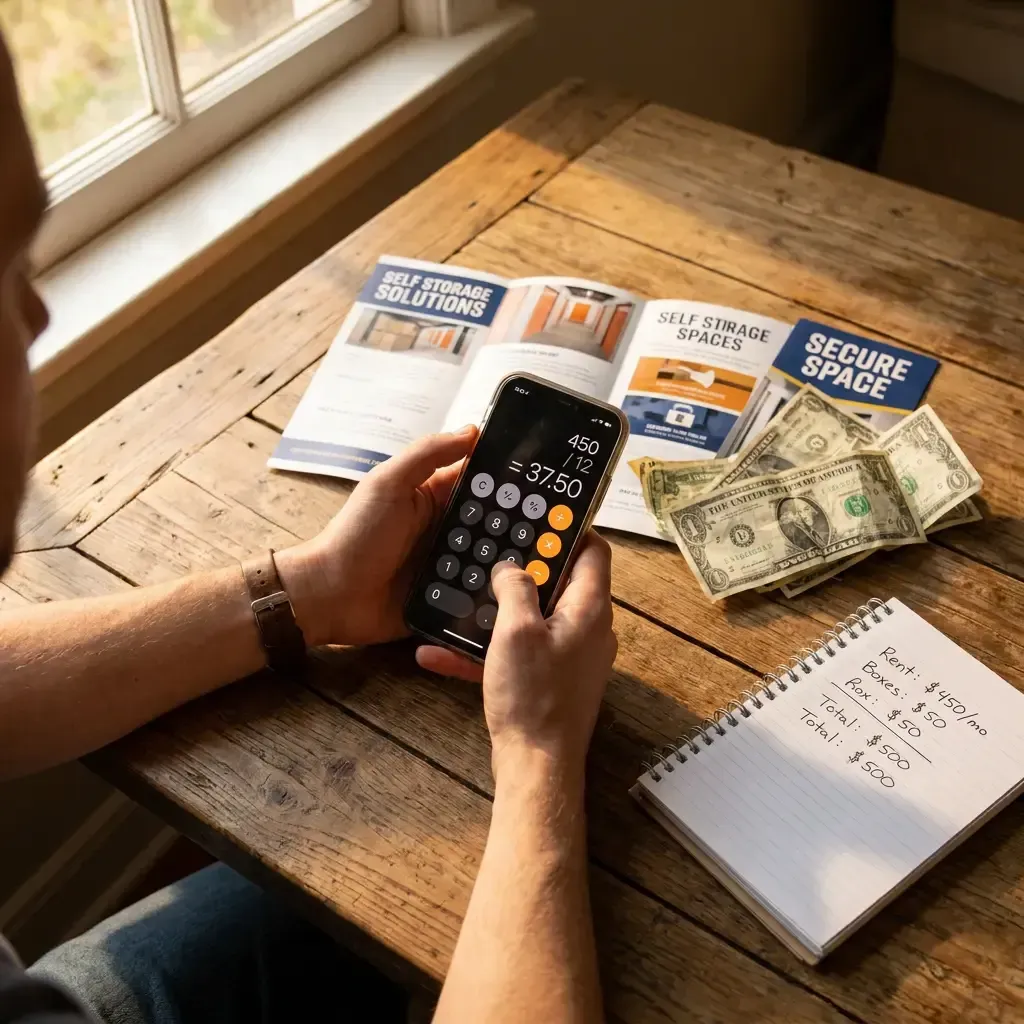
The Self Storage Association reports that climate controlled units typically cost 25 to 50 percent more than comparable standard units nationwide. That premium translates to roughly $360 to $600 extra per year for most unit sizes.
Items That Require Climate Controlled Storage
Certain belongings suffer irreversible damage without temperature and humidity regulation. Research from Neighbor.com identifies six categories of items that benefit most from climate control.
Wood Furniture and Antiques
Solid wood expands when humid and contracts when dry. Repeated cycles cause joints to loosen, veneer to peel, and finishes to crack. A single summer in a standard unit can permanently damage a $3,000 dining table. Antique furniture with original finishes faces even greater risk, as restoration costs often exceed the item's value.
Electronics and Appliances
Circuit boards, LCD screens, and internal components fail when exposed to temperature extremes. Condensation forms inside electronics when units heat and cool rapidly, causing corrosion and short circuits. Computers, televisions, gaming consoles, and small appliances all require stable temperatures between 50 and 85 degrees Fahrenheit.
Documents, Photos, and Artwork
The Library of Congress recommends storing paper documents at temperatures below 75 degrees with humidity under 65 percent. Higher conditions accelerate deterioration and promote mold growth. Photographs stick together permanently when humidity exceeds 60 percent. Oil paintings crack in cold temperatures, while watercolors fade in heat.
Musical Instruments
Guitars, pianos, violins, and other wooden instruments require humidity levels between 40 and 60 percent. The National Association of Music Merchants warns that a single season of improper storage can warp necks, crack soundboards, and ruin tuning stability. Professional-grade instruments worth $5,000 or more demand climate control.
Leather and Fabric Items
Leather furniture, jackets, and accessories dry out and crack in low humidity. High humidity promotes mold growth on leather and fabric surfaces. Wedding dresses, vintage clothing, and upholstered furniture require stable conditions to prevent permanent staining and deterioration.
Wine and Collectibles
Wine requires storage between 45 and 65 degrees Fahrenheit with humidity around 70 percent. Temperatures above 70 degrees accelerate aging and spoil flavor profiles. Comic books, stamps, coins, and sports memorabilia also require stable conditions to maintain collector value.
When Standard Storage Works Fine
Not everything needs climate control. Many common household items tolerate temperature fluctuations without damage, making standard drive-up units a cost-effective choice for certain storage needs.
Items safe for standard storage include:
- Metal furniture, tools, and equipment
- Outdoor gear, camping equipment, and sporting goods
- Holiday decorations made from plastic or metal
- Lawn and garden equipment
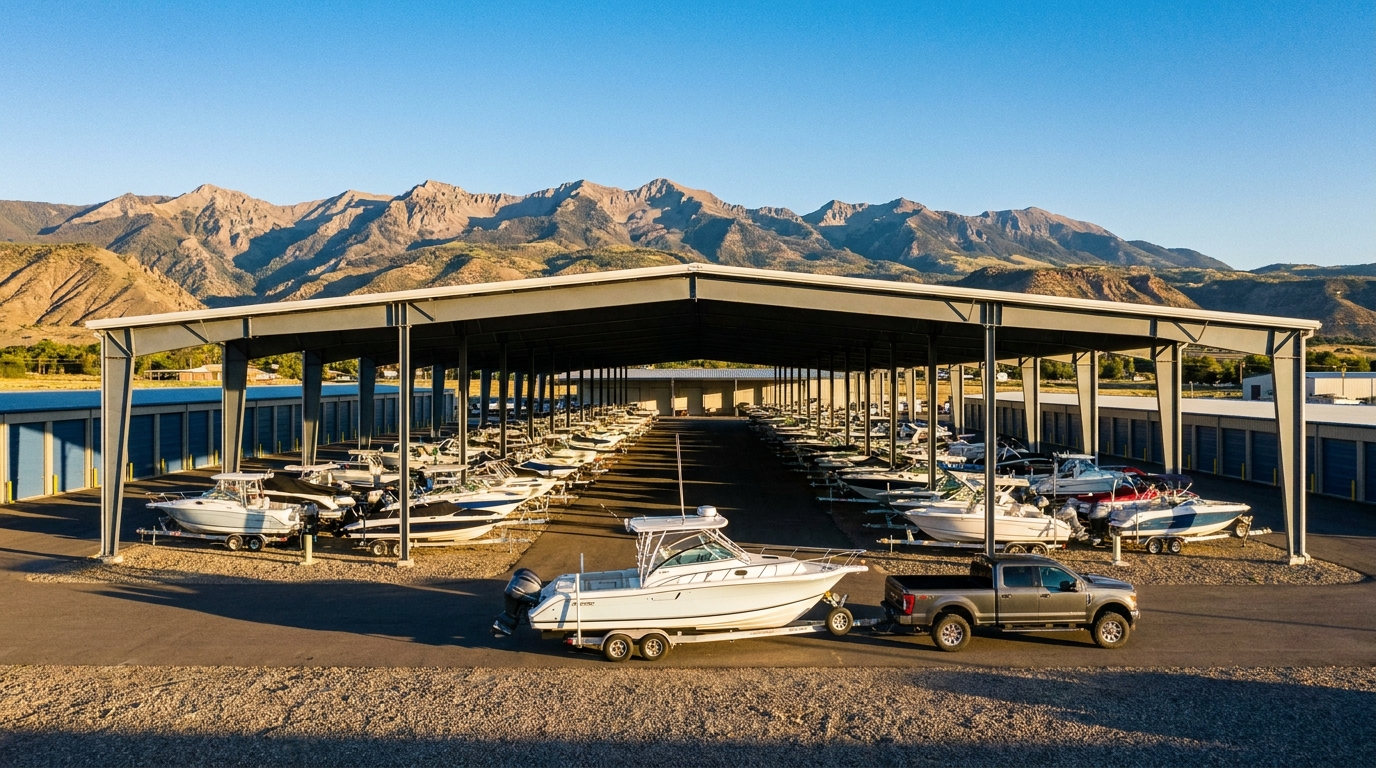
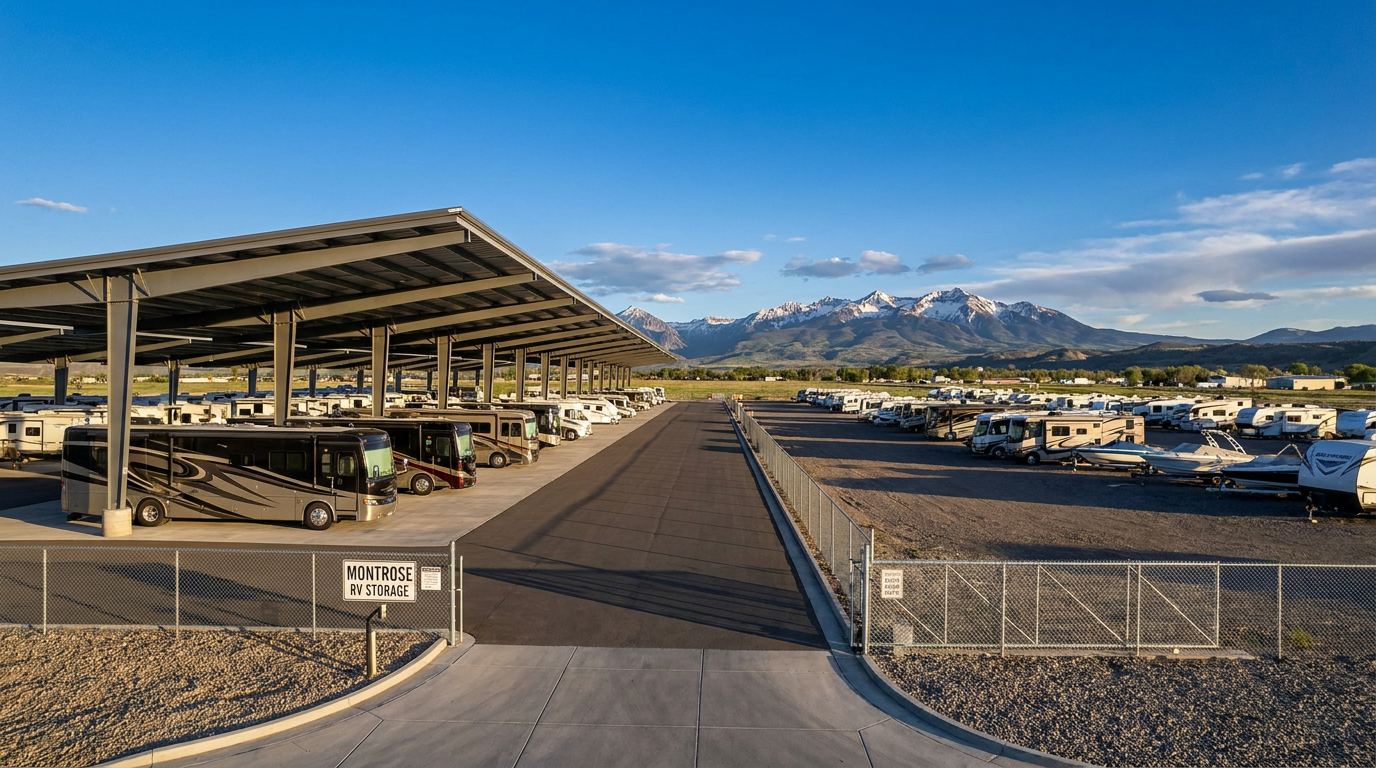
- Vehicles, boats, and recreational equipment
- Sealed plastic containers with non-sensitive contents
- Building materials and construction supplies
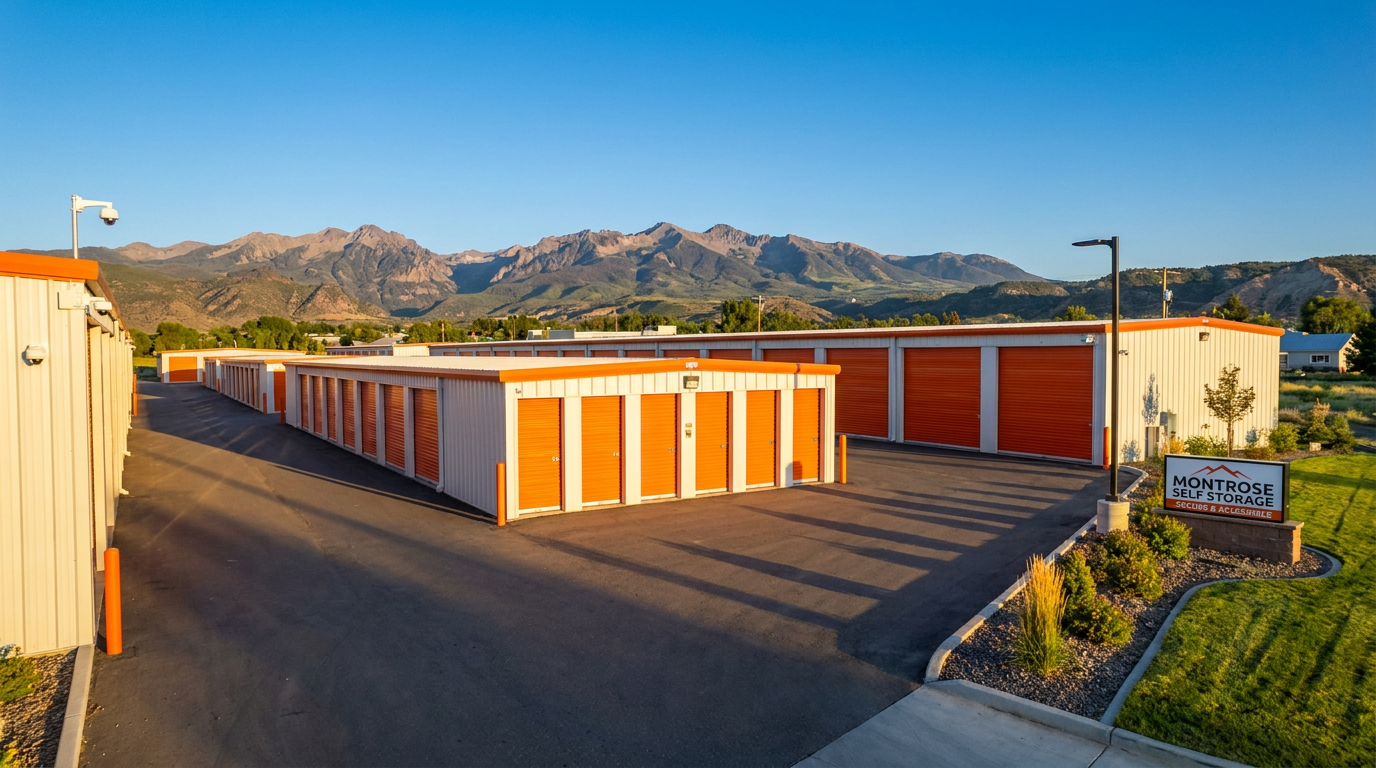
Our Spring Creek location offers 50 percent off select drive-up units, making standard storage even more affordable for these durable items.
The Montrose Climate Factor
Western Colorado's high-desert climate creates unique storage challenges. The National Weather Service reports that Montrose County experiences annual temperature swings of over 100 degrees, from winter lows near negative 10 degrees to summer highs above 95 degrees Fahrenheit.
Humidity levels also fluctuate dramatically. Winter months bring extremely dry conditions below 20 percent humidity, while summer monsoons can push humidity above 60 percent. These swings stress materials more than consistently hot or cold climates.
Residents storing items during ski season near Telluride, Ouray, or Ridgway face additional challenges. Mountain communities experience even more extreme temperature variations, making climate controlled storage essential for seasonal residents and vacation homeowners.
Calculating Your Break-Even Point
Climate control makes financial sense when the cost of potential damage exceeds the premium you pay. Here is a simple formula to determine your break-even point:
Annual climate control premium divided by risk of damage equals minimum protected value.
If climate control costs $400 extra per year and you estimate a 20 percent chance of damage in a standard unit, you need items worth at least $2,000 to justify the upgrade. Most people storing furniture, electronics, or documents easily exceed this threshold.
Consider these replacement costs when calculating:
- Leather sofa: $1,500 to $4,000
- Bedroom furniture set: $2,000 to $6,000
- Desktop computer: $800 to $2,500
- Piano: $3,000 to $15,000
- Professional camera equipment: $2,000 to $10,000
Questions to Ask Before Choosing
According to storage experts at Outrig, answering these five questions helps determine whether climate control is necessary for your situation:
1. How long will you store items?
Short-term storage under 30 days rarely requires climate control unless items are extremely sensitive. Storage exceeding three months significantly increases damage risk in standard units.
2. What season are you storing through?
Storing through a Montrose summer or winter exposes items to extreme temperatures. Spring and fall storage carries less risk.
3. What is the total replacement value?
Add up what it would cost to replace everything you plan to store. If the total exceeds $2,000, climate control likely makes financial sense.
4. Do items have sentimental value?
Family photographs, heirlooms, and irreplaceable items deserve protection regardless of monetary value. No insurance payment replaces grandmother's wedding dress.
5. Are items insured?
Many homeowner's insurance policies exclude damage from improper storage conditions. Check your policy before assuming coverage applies.
Climate Controlled Storage for Furniture
Furniture represents the most common reason people choose climate controlled storage. The American Home Furnishings Alliance estimates that temperature and humidity damage accounts for 15 percent of all furniture claims.
Wood furniture faces the greatest risk. Solid hardwoods like oak, maple, and walnut expand up to 2 percent across the grain when humidity increases. This movement loosens joints, cracks finishes, and warps flat surfaces. Veneer furniture delaminates when adhesives fail in high heat.
Upholstered furniture absorbs moisture that promotes mold and mildew growth. Fabric fibers weaken and discolor when exposed to temperature extremes. Foam cushions break down faster in heat, losing support and comfort.
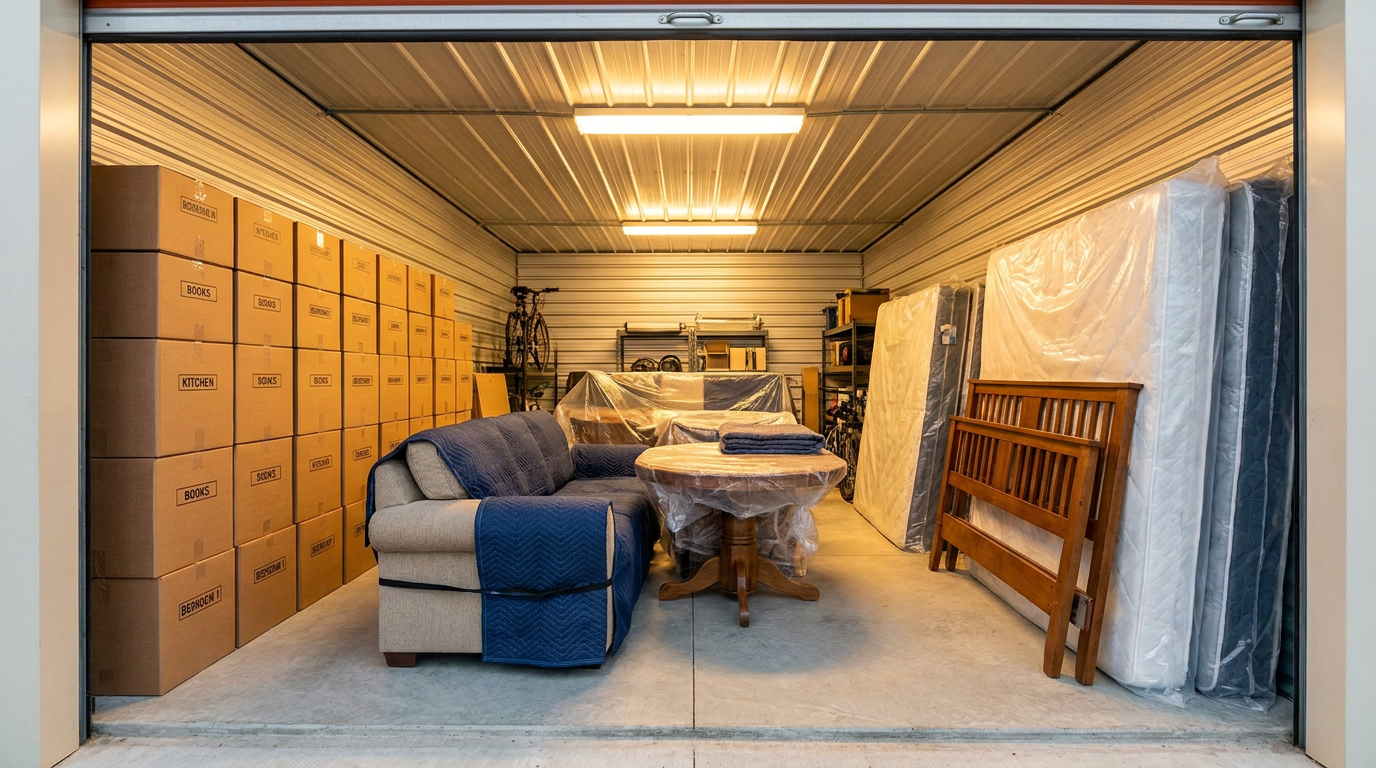
Not sure how much space your furniture requires? Use our storage unit size guide to find the right fit before deciding between climate controlled and standard options.
Protecting Electronics in Storage
Consumer electronics require stable conditions to maintain functionality. The Consumer Technology Association recommends operating and storage temperatures between 50 and 95 degrees Fahrenheit for most devices.
Hard drives fail when temperatures exceed 95 degrees or drop below 40 degrees. LCD screens develop permanent dark spots from extreme cold. Batteries lose capacity and may leak or swell in high heat. Plastic housings become brittle and crack in temperature cycling.
Condensation poses the greatest threat. When a cold unit heats rapidly, moisture forms on circuit boards and connectors. This moisture causes corrosion and short circuits that may not appear until months later when you retrieve your items.
Document and Photo Preservation
Paper deteriorates through oxidation, a process accelerated by heat and humidity. The National Archives recommends storage temperatures below 70 degrees with humidity between 30 and 40 percent for long-term document preservation.
Photographs face additional challenges. Gelatin-based prints from before 2000 stick together permanently when humidity exceeds 60 percent. Color photographs fade faster in heat, losing vibrancy within months of improper storage. Negatives and slides warp and become unusable.
Business records, tax documents, and legal papers require protection for compliance reasons. The IRS recommends keeping tax records for seven years, making proper storage essential for businesses and individuals alike.
Making the Right Choice for Your Situation
Climate controlled storage delivers clear value for temperature-sensitive belongings stored more than 30 days. The monthly premium of $30 to $50 protects items worth thousands of dollars from irreversible damage.
Our N 9th Street facility offers climate controlled units starting at $71 per month for compact 4x5 spaces. These units maintain consistent temperatures year-round, protecting your belongings through Montrose's extreme seasonal variations.
For items that tolerate temperature swings, standard drive-up units provide convenient access at lower cost. Our four Montrose locations offer flexible options for every storage need, with month-to-month leases and no deposit required.
Have questions about which storage type fits your needs? Check our storage FAQ or contact our team at (970) 249-5511. We help Montrose County residents, Telluride seasonal visitors, and Western Slope businesses find the right storage solution every day.
|