Storage Unit Rental Checklist: 15 Things to Verify First |
| STORAGE UNIT RENTAL CHECKLIST: 15 THINGS TO VERIFY BEFORE SIGNING
⏱ 13 min read ·
📄 #2,419 words
Before signing a storage unit lease, verify these 15 critical items including pricing, security, access hours, and insurance. Complete checklist for renters.
|
B efore signing a storage unit rental agreement, verify the total monthly cost (including fees), access hours, security features, insurance requirements, unit condition, and move-out terms. These six categories contain the 15 specific items that prevent costly surprises and protect your belongings during the rental period.
| Key Points: | |
|---|---|
| • | Total first-month costs typically include rent plus $15-50 in administrative fees, lock purchases, and potential deposits |
| • | Promotional rates often expire after 30-90 days, with regular rates 40-100% higher |
| • | Climate-controlled units maintain 55-80°F and cost 25-50% more than standard units |
| • | Most facilities require 10-30 days written notice before move-out to avoid extra billing |
| • | Insurance coverage of $2,000-10,000 costs $8-25 monthly if your existing policy does not cover stored items |
Why a Pre-Signing Checklist Matters
According to Move.org's storage research, first-time renters frequently underestimate total costs by 20-35% because they focus only on advertised monthly rates. Administrative fees, mandatory insurance, and lock purchases add $30-75 to your first payment.
The Self Storage Association reports that 9.4% of American households currently rent storage units, yet industry surveys indicate 23% of renters experience billing surprises within their first three months. A systematic verification process eliminates these issues before they affect your budget or belongings.
This checklist organizes 15 verification items into six categories: pricing transparency, access and convenience, security features, unit condition, insurance and liability, and contract terms. Each item includes specific questions to ask and red flags to identify.
Category 1: Pricing Transparency (Items 1-4)
Item 1: Verify the True Monthly Rate
Ask for the standard monthly rate, not just the promotional price. Promotional storage pricing from facilities like Public Storage or Extra Space Storage typically applies only to the first month, according to Groupon's analysis of storage deals. A "$1 first month" promotion often converts to $120-180 monthly afterward.
Request written confirmation of when promotional rates expire and what the regular rate becomes. Calculate your 6-month and 12-month total costs using the post-promotion rate to compare facilities accurately.
Item 2: Identify All Upfront Fees
Administrative fees range from $15-50 at most facilities. Lock purchases add $10-25 if the facility requires a specific type. Some facilities charge a refundable deposit equal to one month's rent, while others require no deposit at all.
Create a day-one cost breakdown that includes: first month's rent, administrative fee, lock cost, insurance premium, and any deposit. This total represents your actual move-in expense.
Item 3: Understand Rate Increase Policies
Industry data from the Self Storage Association indicates average annual rate increases of 8-12% for existing tenants. Some facilities cap increases at a specific percentage, while others reserve the right to adjust rates with 30 days notice.
Ask specifically: "What was the last rate increase for existing tenants, and when did it occur?" Facilities with stable rent policies, such as those offering rate-lock guarantees, provide better long-term value for renters planning to store items for 6 months or longer.
Item 4: Confirm Payment Methods and Late Fees
Late fees typically range from $10-25 or 10-20% of the monthly rent, applied 5-15 days after the due date. Some facilities offer autopay discounts of $5-10 monthly. Others charge returned payment fees of $25-35.
Verify the exact grace period before late fees apply. Ask about lien sale timelines, which typically begin 30-90 days after non-payment depending on state law. Colorado requires facilities to provide written notice before selling contents at auction.
Category 2: Access and Convenience (Items 5-7)
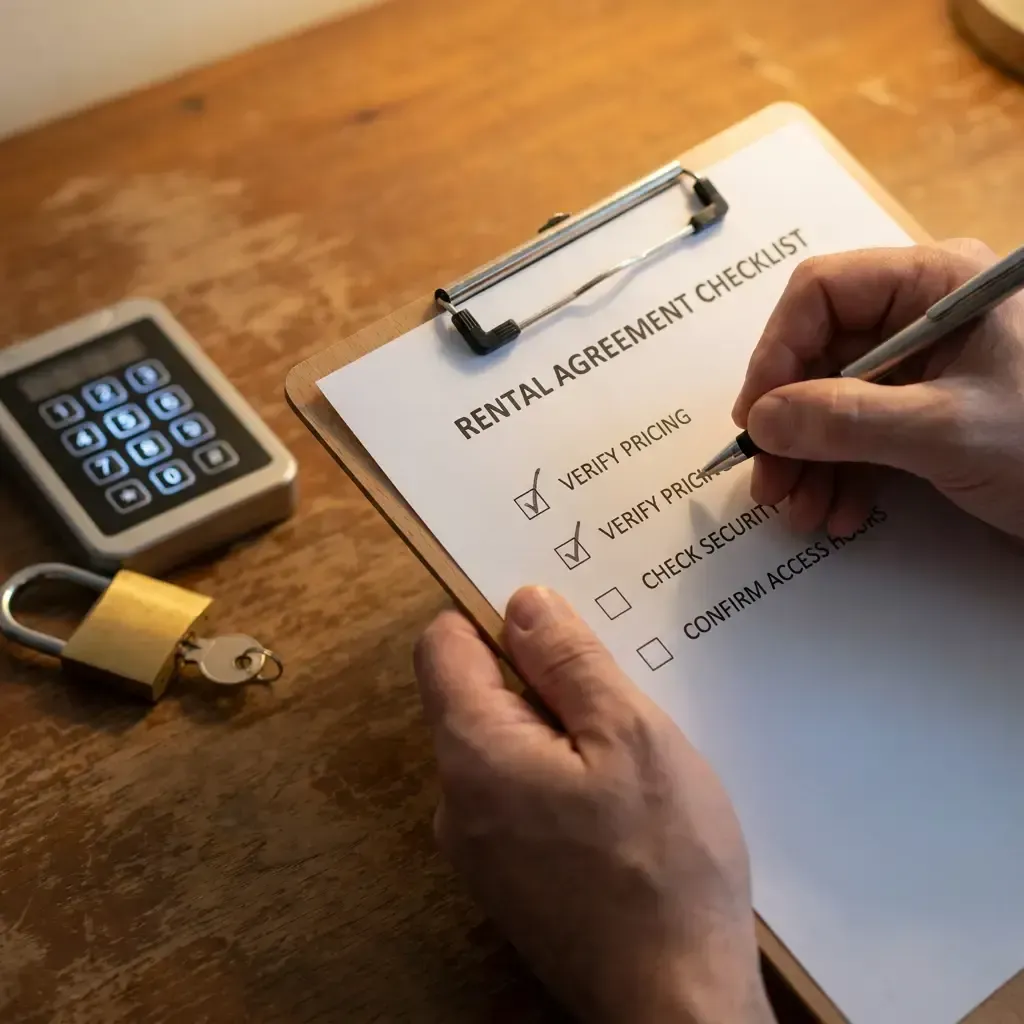
Item 5: Confirm Access Hours and Entry Method
Access hours vary significantly between facilities. Some offer 24/7 access, while others restrict entry to 6 AM-9 PM or staffed hours only. Weekend and holiday access may differ from weekday schedules.
Determine the entry method: keypad codes, smartphone apps, key cards, or staffed gates. Ask whether access codes change periodically and how you receive updates. Facilities using app-based access like OpenTech or Nokē Smart Entry provide activity logs showing when you accessed your unit.
Item 6: Evaluate Loading Convenience
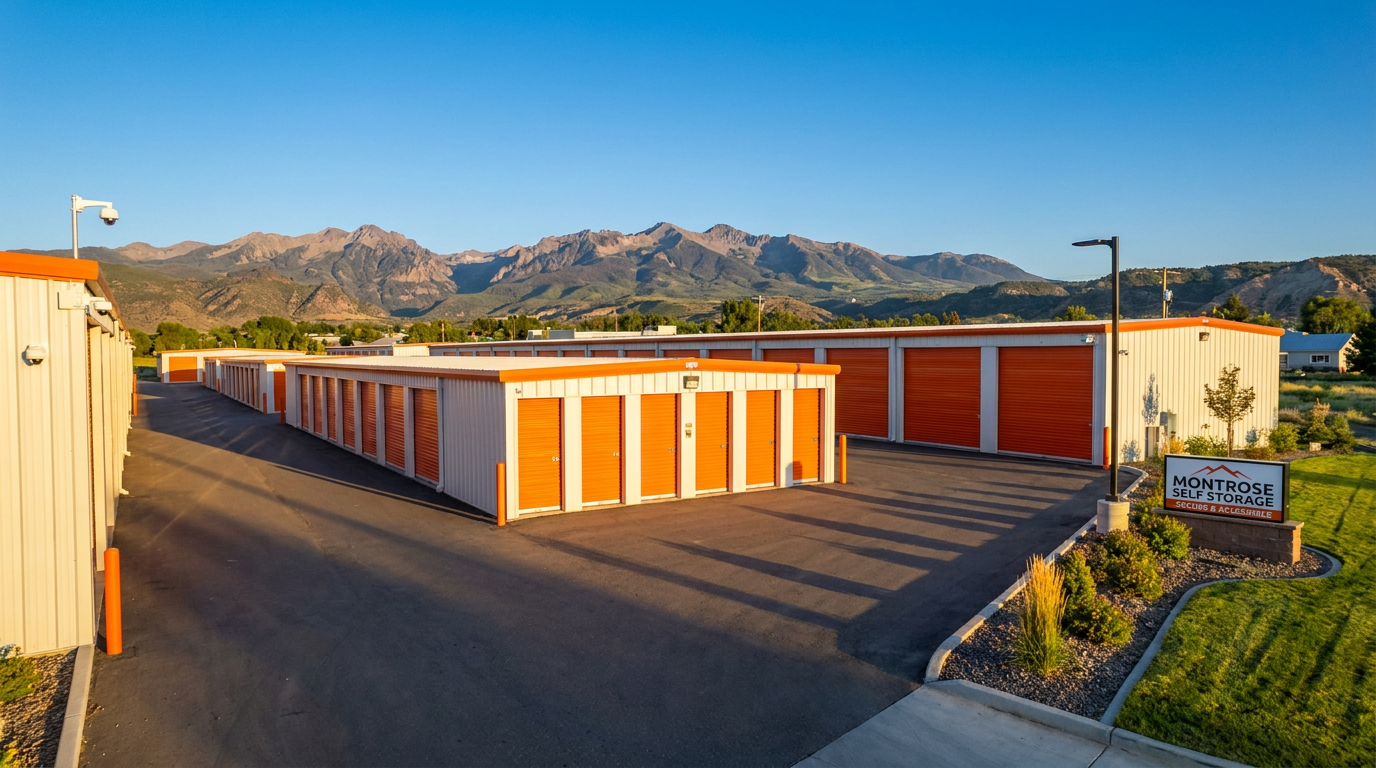
Drive-up units allow you to park directly at your unit door, reducing loading time by 50-70% compared to interior units requiring hallway navigation. Ground-floor interior units offer weather protection without elevator delays.
Upper-floor units in multi-story facilities depend on elevator availability. Ask about elevator dimensions (most accommodate standard furniture but not king mattresses laid flat) and whether freight elevators exist for large items.
Item 7: Check for Vehicle and Oversized Item Access
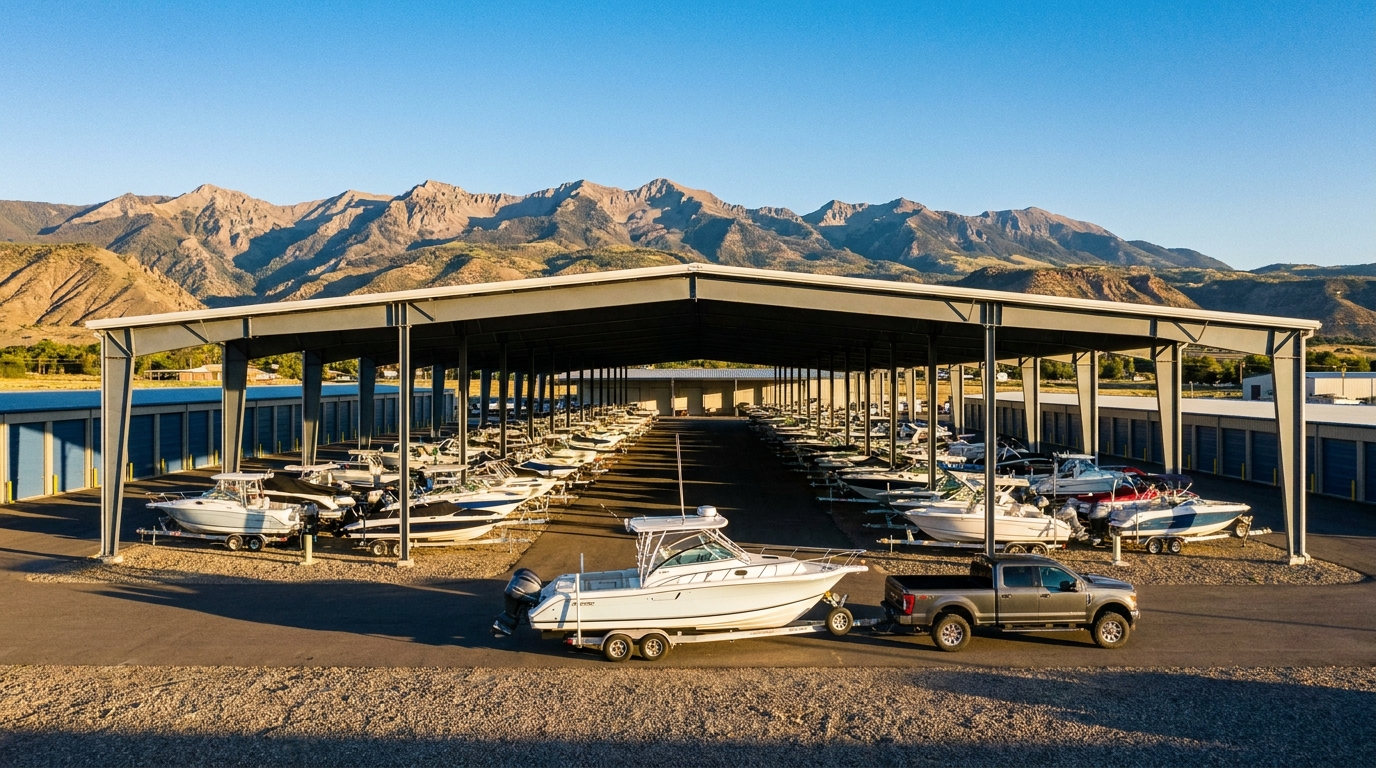
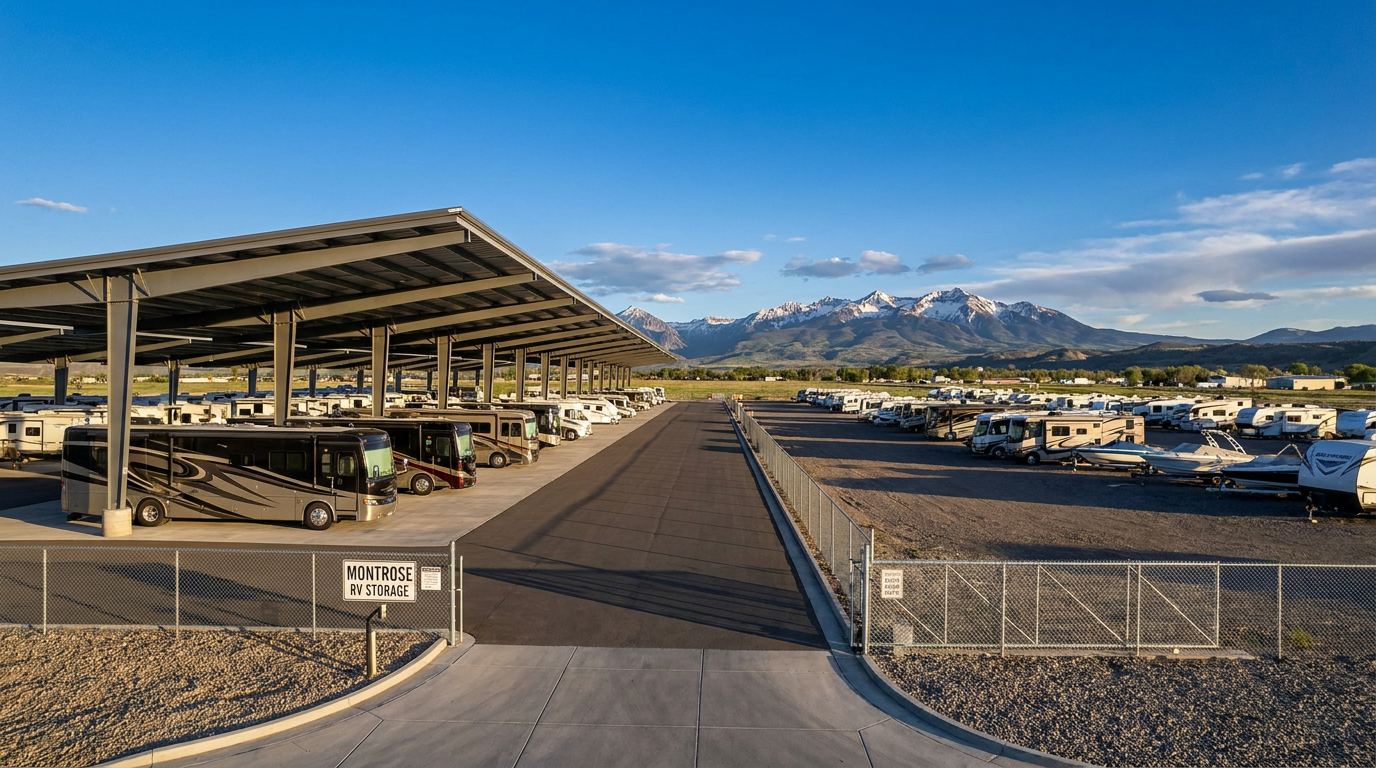
If storing vehicles, boats, or RVs, verify unit dimensions accommodate your specific vehicle plus 6-12 inches clearance on each side. Standard 10x20 units (200 square feet) fit most sedans and small SUVs. Larger vehicles require 10x25 or 10x30 spaces.
Ask about height restrictions for RVs and boats with trailers. Some facilities offer uncovered outdoor parking at lower rates ($50-100 monthly) while enclosed vehicle storage costs $150-350 monthly depending on size.
Category 3: Security Features (Items 8-9)
Item 8: Assess Physical Security Measures
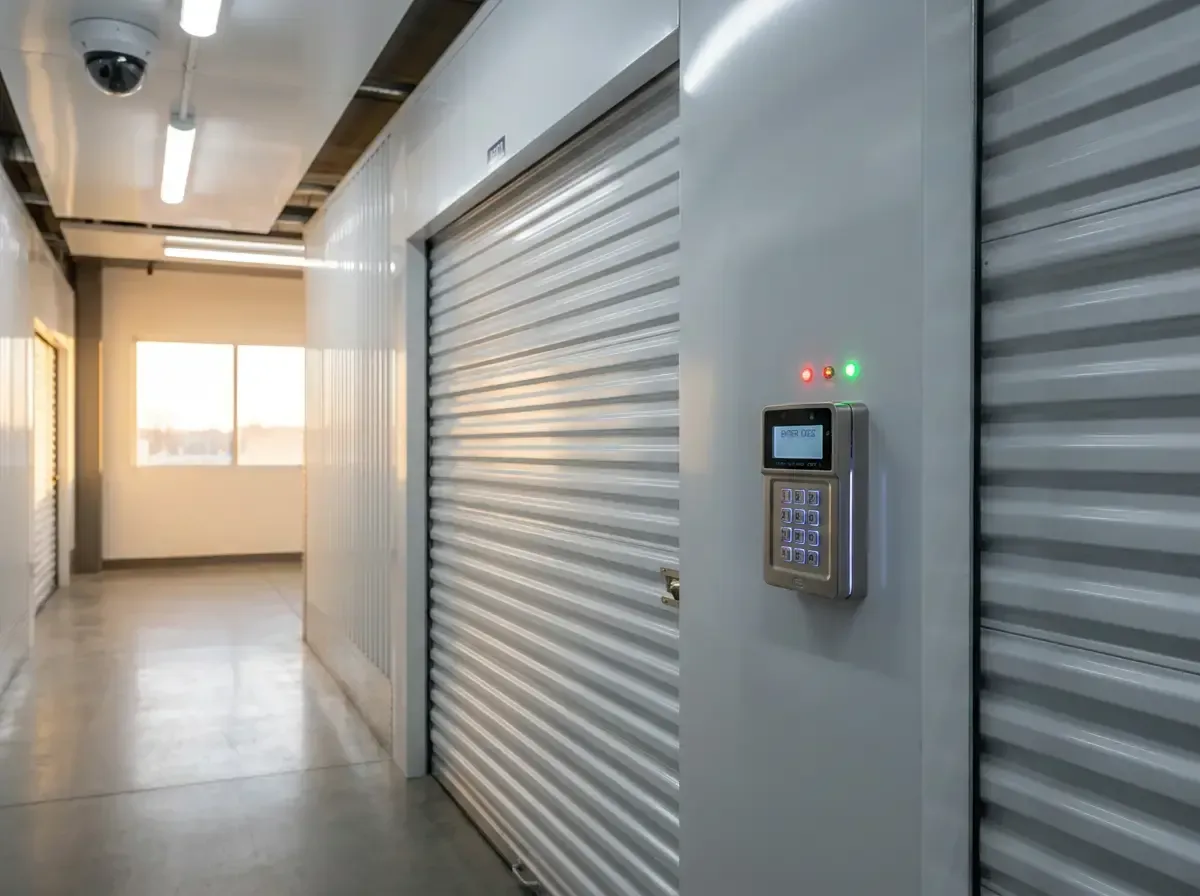
According to StorageStar's facility evaluation guide, essential security features include perimeter fencing (6 feet minimum), electronic gate access, security cameras covering all access points, and adequate lighting throughout the property.
During your facility tour, count visible cameras and note whether they cover your specific unit's hallway or drive aisle. Ask whether cameras record continuously or only on motion detection, and how long footage is retained (industry standard is 30-90 days).
| Security Feature | Basic Facility | Premium Facility |
|---|---|---|
| Perimeter Fencing | Chain link, 6 ft | Iron/steel, 8 ft with anti-climb |
| Camera Coverage | Entry/exit points only | All hallways and drive aisles |
| Access Control | Keypad code | Individual unit alarms + app access |
| On-Site Staff | Business hours only | Extended hours or resident manager |
| Lighting | Motion-activated | Continuous LED throughout |
Item 9: Verify Individual Unit Security
Confirm whether the facility requires cylinder locks (which cannot be cut with standard bolt cutters) or accepts any padlock type. Disc locks and shrouded shackle locks provide better protection than standard padlocks.
Some facilities offer individual unit door alarms that trigger when opened without proper code entry. This feature adds $5-15 monthly but provides notification if someone accesses your unit unexpectedly.
Category 4: Unit Condition (Items 10-11)
Item 10: Inspect the Specific Unit Before Signing
Request to see your exact assigned unit, not a model or similar unit. Check for water stains on walls or ceiling indicating past leaks. Inspect the floor for cracks, moisture, or pest evidence. Test the door operation for smooth rolling and secure closing.
Document any existing damage with photos before move-in. Email these photos to the facility manager with a timestamp to establish the unit's condition at rental start.
Item 11: Evaluate Climate Control Necessity
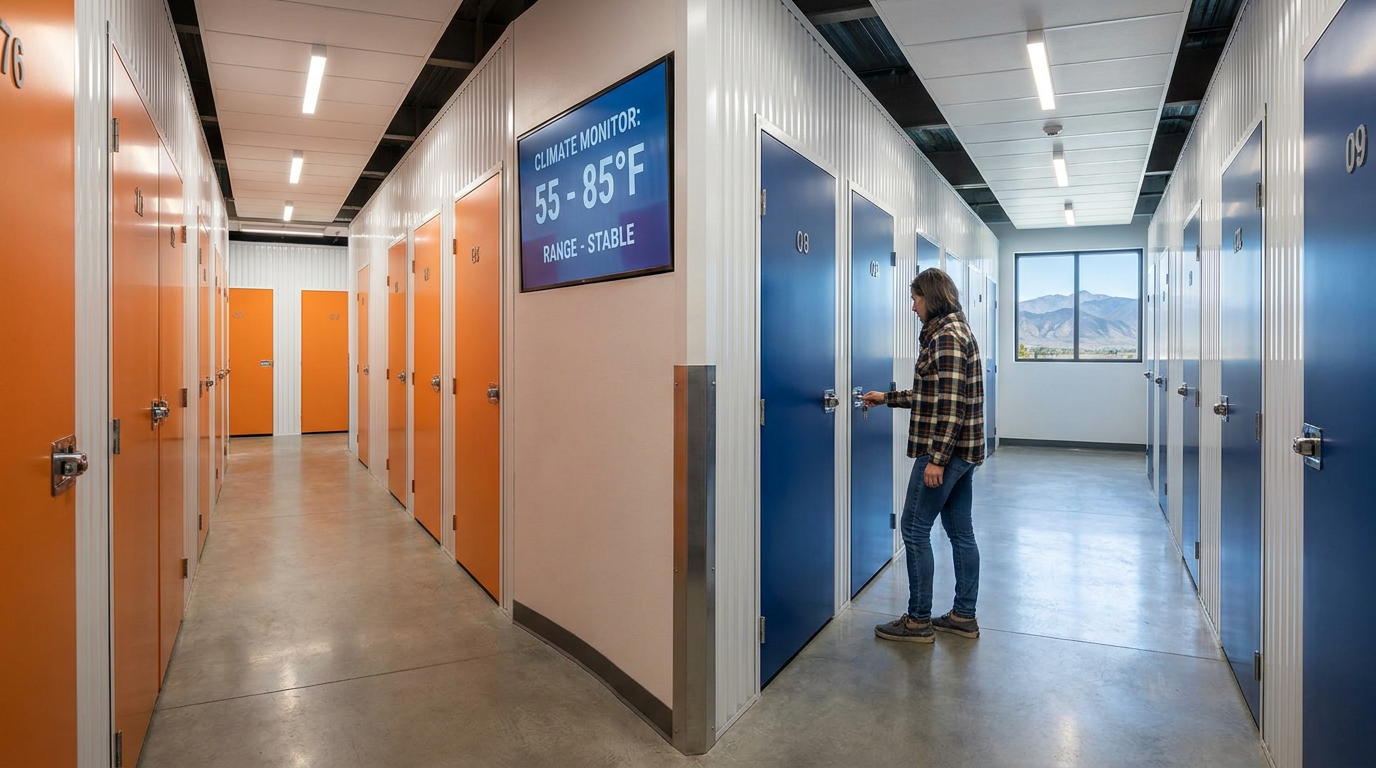
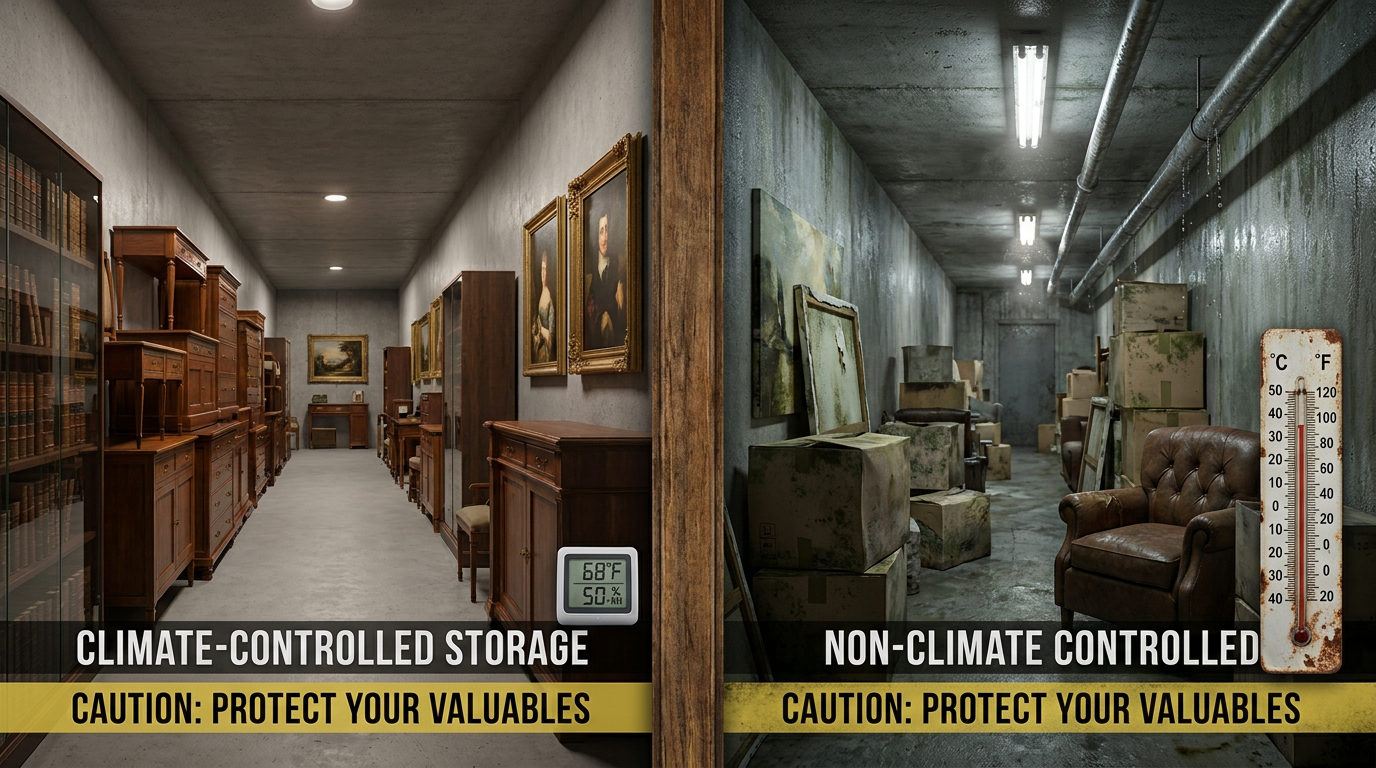
Climate-controlled units maintain temperatures between 55-80°F and humidity levels below 55%. These conditions protect wood furniture, electronics, photographs, documents, musical instruments, and leather goods from warping, mold, and deterioration.
Standard units experience temperature swings matching outdoor conditions. In Montrose, Colorado, where summer highs reach 90°F and winter lows drop below 10°F, climate control becomes essential for temperature-sensitive items stored longer than 3-4 months. Our N 9th Street facility offers climate-controlled options starting at $71 monthly for compact units.
Category 5: Insurance and Liability (Items 12-13)
Item 12: Understand Insurance Requirements
Most facilities require proof of insurance covering stored items. Your homeowners or renters policy may already include coverage, typically up to 10% of your personal property limit. Contact your insurance provider (State Farm, Allstate, USAA, or others) to confirm coverage extends to storage units and note any exclusions.
If your existing policy does not cover stored items, facility-offered insurance costs $8-25 monthly for $2,000-10,000 coverage. Third-party storage insurance from providers like Safestor or StorageFirst often costs 15-30% less than facility plans with equivalent coverage.
Item 13: Review Liability Limitations
Storage facility rental agreements typically include liability limitation clauses. These clauses specify that the facility is not responsible for damage from flooding, fire, theft, or other causes unless resulting from facility negligence.
Read the specific liability language in your contract. Note any exclusions for "acts of God," pest damage, or temperature fluctuations in non-climate-controlled units. Understanding these limitations helps you make informed decisions about insurance coverage amounts.
Category 6: Contract Terms (Items 14-15)
Item 14: Confirm Lease Type and Commitment
Month-to-month leases provide maximum flexibility, allowing you to vacate with proper notice (typically 10-30 days) without penalty. Some promotional rates require 3-6 month commitments, with early termination fees of one month's rent if you leave before the commitment period ends.
Ask specifically: "Is this a month-to-month agreement, and what happens if I need to leave before any promotional period ends?" Facilities offering month-to-month rentals with no deposit provide the most flexibility for renters with uncertain timelines.
Item 15: Verify Move-Out Procedures
Move-out notice requirements range from 10-30 days depending on the facility. Missing the notice deadline typically results in charges for an additional billing cycle. Some facilities prorate final month charges, while others charge full monthly rates regardless of move-out date.
Confirm the move-out inspection process. Most facilities require units to be completely empty and swept clean. Ask whether the facility conducts a final walkthrough and how quickly your deposit (if any) is returned after move-out.
Prohibited Items to Verify Before Storing
Standard storage rental agreements prohibit specific item categories. Verify your intended items are permitted before signing:
- Flammable materials: Gasoline, propane, paint thinner, fireworks
- Perishable items: Food, plants, anything requiring refrigeration
- Hazardous materials: Chemicals, fertilizers, batteries (in some cases)
- Living things: Animals, plants requiring care
- Illegal items: Stolen property, controlled substances
- Vehicles with fuel: Some facilities require tanks be less than 1/4 full
Firearms storage policies vary by facility and state law. Colorado does not prohibit firearm storage in self-storage units, but individual facilities may have restrictions. Ask specifically if you plan to store firearms.
Documents Required for Renting
Prepare these documents before visiting a storage facility to complete rental quickly:
- Government-issued photo ID: Driver's license, state ID, passport, or military ID
- Proof of insurance: Declarations page showing personal property coverage or willingness to purchase facility insurance
- Payment method: Credit card, debit card, or checking account for autopay setup
- Vehicle information: License plate and registration if storing a vehicle
Some facilities require a secondary contact person who can be reached if the primary renter becomes unreachable. This person does not have access rights but may be contacted regarding late payments or emergencies.
Questions to Ask During Your Facility Tour
Beyond the 15 checklist items, these questions reveal facility quality and management responsiveness:
"What is your average tenant stay duration?" Facilities with longer average stays (12+ months) typically indicate satisfied customers and stable operations.
"How quickly do you respond to maintenance issues?" Quality facilities address door problems, lighting outages, and pest concerns within 24-48 hours.
"Can I see your most recent pest control service record?" Professional facilities maintain regular pest control schedules, typically monthly or quarterly treatments.
"What happens if I lose my access code or lock key?" Understand the process and any fees for access recovery before you need it.
Sample First-Month Cost Calculation
Use this framework to calculate your actual move-in costs at any facility:
| Cost Item | Typical Range | Your Facility |
|---|---|---|
| First Month Rent | $50-300 | $_____ |
| Administrative Fee | $15-50 | $_____ |
| Lock Purchase | $10-25 | $_____ |
| Insurance (if needed) | $8-25 | $_____ |
| Security Deposit | $0-100 | $_____ |
| Total Move-In Cost | $83-500 | $_____ |
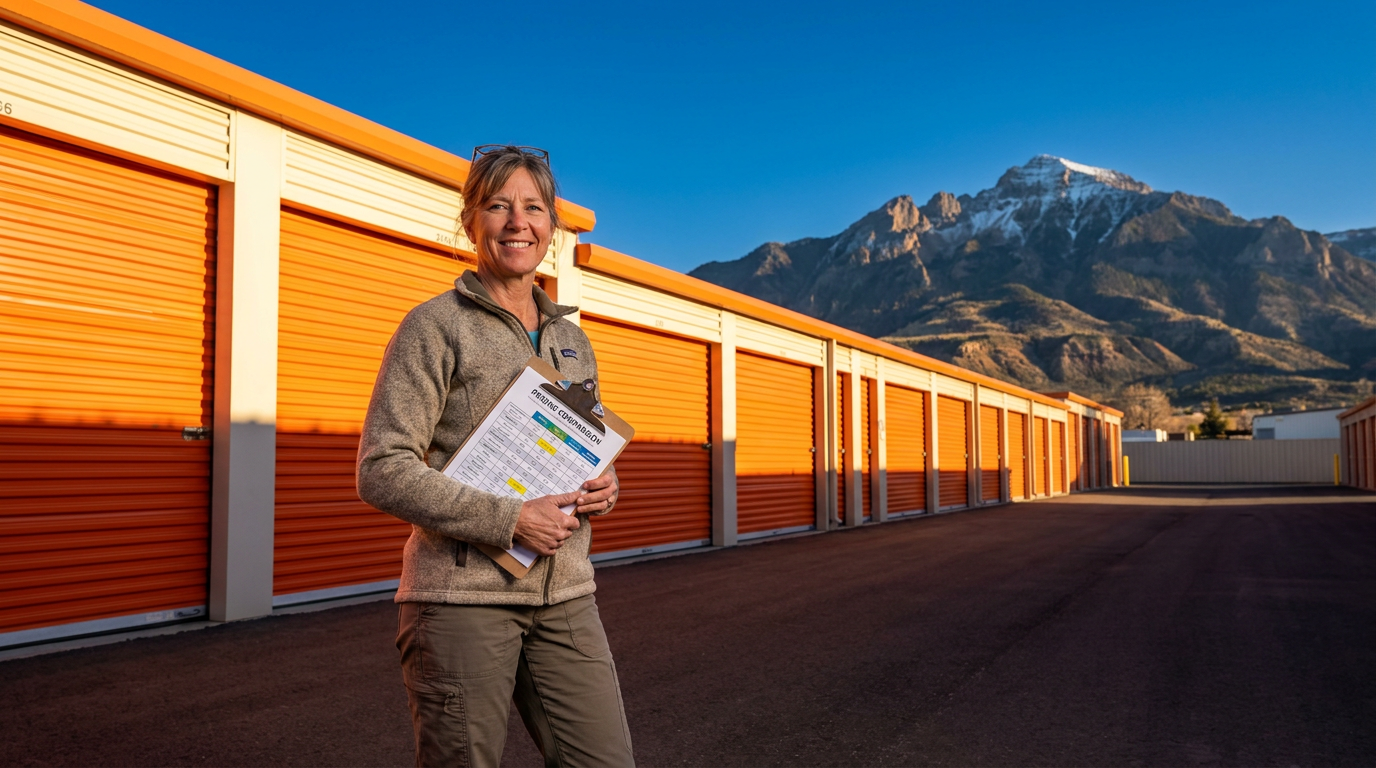
Facilities that waive administrative fees or deposits reduce your move-in costs by $25-100. When comparing facilities, use total 6-month or 12-month costs rather than first-month promotions for accurate comparison.
Red Flags That Indicate Problems
Walk away from facilities exhibiting these warning signs:
- Refusal to show your specific unit: Quality facilities allow inspection before signing
- Pressure to sign immediately: Legitimate promotions remain available for at least 24-48 hours
- Unclear pricing: If staff cannot provide exact total costs, billing surprises will follow
- Visible pest evidence: Droppings, dead insects, or gnaw marks indicate ongoing problems
- Non-functional security cameras: Cameras pointing at walls or showing no recording indicator
- Excessive negative reviews: More than 20% of recent reviews mentioning billing disputes or access problems
Choosing the Right Unit Size
Unit size directly affects monthly cost. Renting a unit 25% larger than needed wastes $15-50 monthly. Use these guidelines from the Self Storage Association:
- 5x5 (25 sq ft): Small closet contents, seasonal decorations, boxes of documents
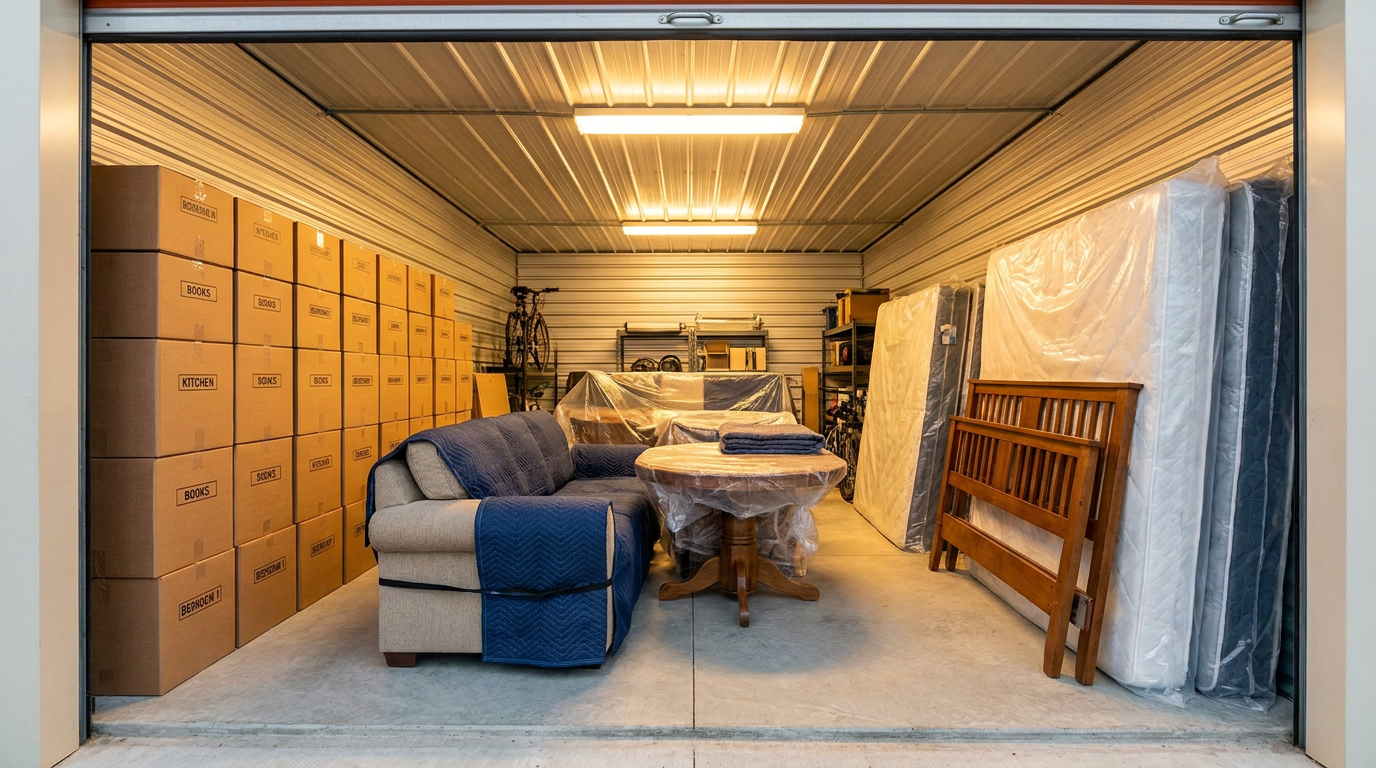
- 5x10 (50 sq ft): Studio apartment contents, small furniture, mattress set
- 10x10 (100 sq ft): One-bedroom apartment, small office, seasonal equipment
- 10x15 (150 sq ft): Two-bedroom apartment, larger furniture pieces
- 10x20 (200 sq ft): Three-bedroom house, vehicle, business inventory
- 10x25+ (250+ sq ft): Four-bedroom house, multiple vehicles, large equipment
Not sure which size fits your needs? Our storage unit size guide provides detailed recommendations based on room contents and item types.
Frequently Asked Questions
What documents do you need for a storage unit?
You need a government-issued photo ID (driver's license, passport, or state ID), a payment method for rent and deposits, and proof of insurance or willingness to purchase facility coverage. Vehicle storage requires registration and license plate information.
Can I sleep in my storage unit during the day?
No. Sleeping or living in storage units violates rental agreements and local housing codes. Storage facilities are not zoned for habitation and lack required safety features including ventilation, fire suppression, and emergency exits designed for occupied spaces. Violation results in immediate lease termination.
What ID do I need for a storage unit?
Acceptable IDs include state-issued driver's licenses, state ID cards, U.S. passports, military IDs, and permanent resident cards. The ID must be current (not expired) and include a photo. Some facilities accept foreign passports with additional documentation.
What should I look for before renting a storage unit?
Verify total costs including fees, confirm access hours match your schedule, inspect security features and your specific unit condition, understand insurance requirements, and review contract terms for move-out notice and rate increase policies. The 15-item checklist above covers all critical verification points.
Local Storage Options in Montrose, Colorado
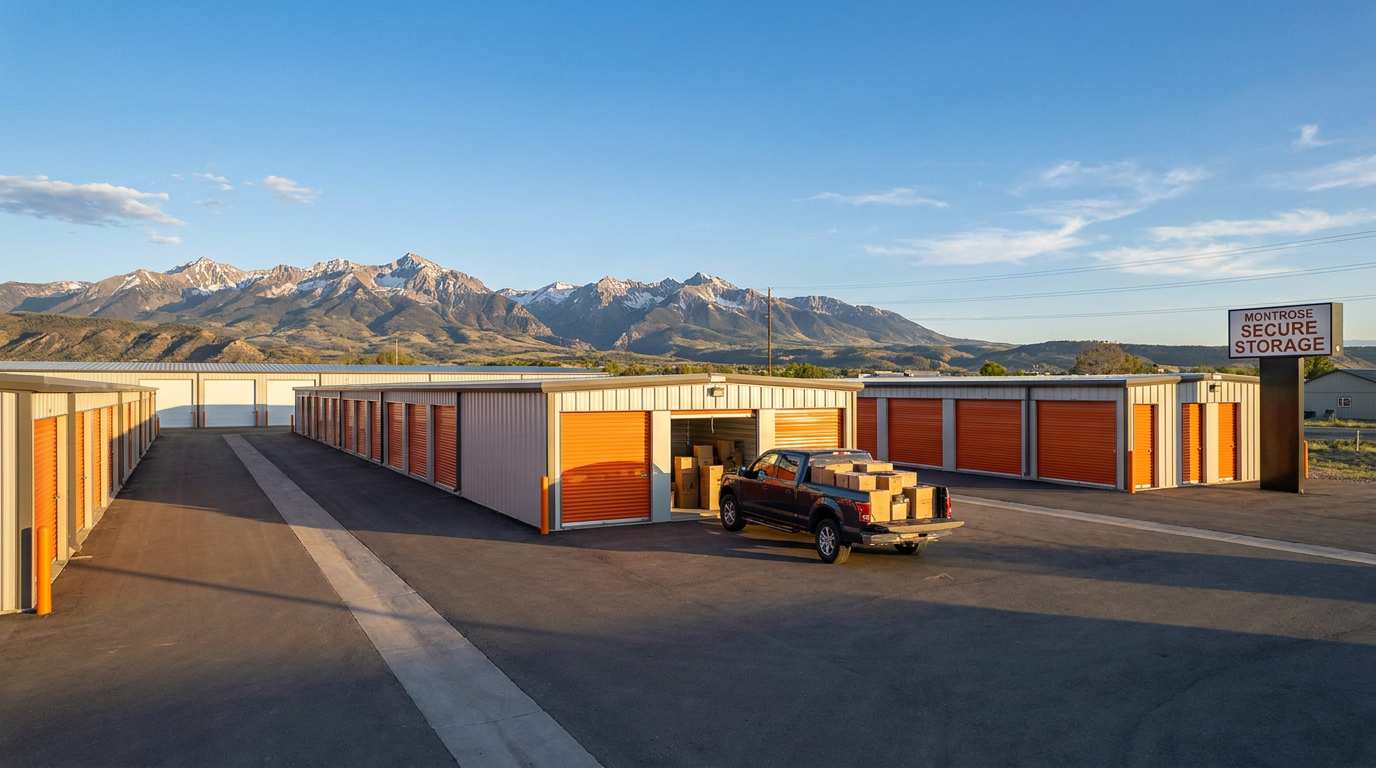
For Western Slope residents in Montrose County, Ouray, Ridgway, Delta, and surrounding communities, locally owned storage facilities often provide advantages over national chains. These include personalized service, competitive pricing without corporate overhead, and staff familiar with local needs like seasonal gear storage for Telluride visitors.
Browse all four Montrose storage locations to compare drive-up, indoor, and climate-controlled options. Current promotions include 50% off select units at the Spring Creek facility, with 10x10 units starting at $62 monthly and 10x20 units at $142 monthly.
|